Ptitim (Israel couscous) with Homemade Pesto
Pesto ptitim is a delightful and flavorful dish that combines the unique taste and texture of Israeli pearl couscous with the vibrant flavors of pesto. This dish can be served as a satisfying main course or as a side dish.
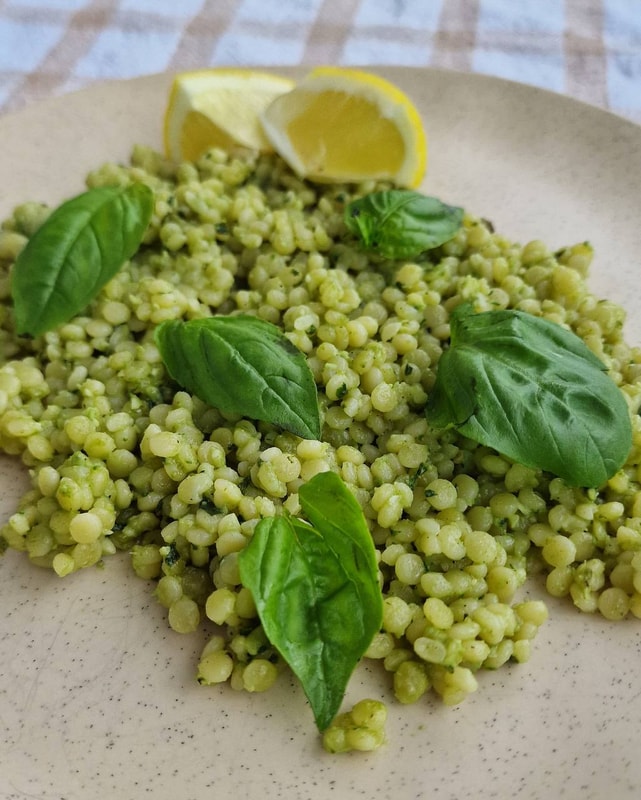
Ingredients
- 60 g ptitim
- 1 tsp salt
- water
- 1 cup fresh basil leaves
- 2 tbsp freshly grated Parmesan cheese
- 2 tbsp extra virgin olive oil
- 2 tbsp pine nuts
- 1 garlic clove, minced
- Salt and black pepper to taste
Instructions
For ptitim, settle the water with some salt to boil. When it starts boiling, add the ptitim and cook for 8-10 minutes. Then drain it and set it aside.
For the pesto, combine the basil leaves, Parmesan cheese, pine nuts, garlic, salt, and black pepper in a food processor or blender. Pulse until coarsely chopped. Gradually add the olive oil while continuing to pulse, until a smooth and creamy consistency is reached.
Mix the ptitim with the homemade pesto, making sure to evenly coat the grains. Enjoy!
Chef's Tips & Notes
Recipe Details
Recipe Tags
Ptitim, also known as Israeli couscous, is a versatile and delicious pasta! Supplemented with homemade pesto sauce we create a delightful and refreshing side dish that can be served with a variety of foods. Believe me, you’ll like this Ptitim with Homemade Pesto!
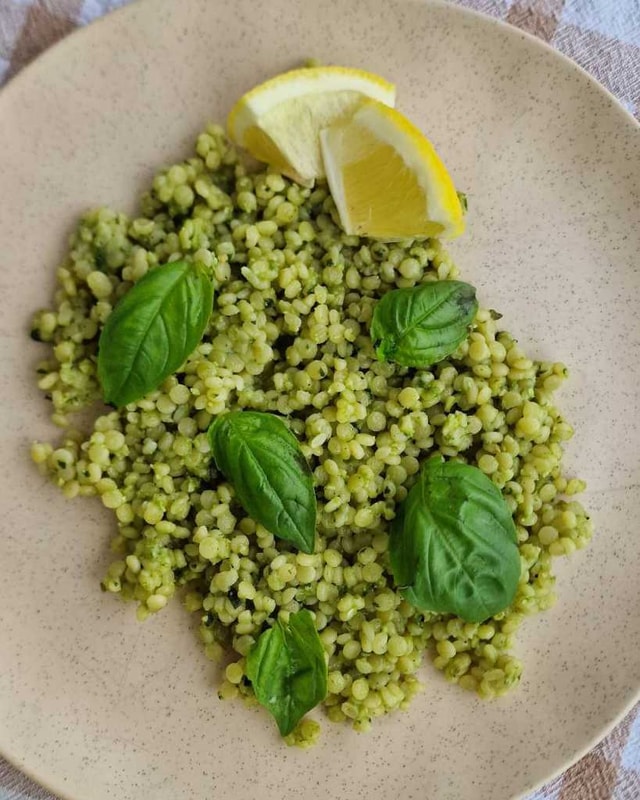
Is Israeli pearl couscous healthy?
Israeli pearl couscous, also known as ptitim, can be a healthy addition to a balanced diet. It is made from semolina or wheat flour, which makes it a good source of complex carbohydrates and relatively low-fat food. However, its nutritional value depends on how it is prepared and the ingredients that are added to the dish. Here are some health-related aspects of Israeli pearl couscous:
- Whole grain option: Choose whole wheat Israeli couscous when possible, as it contains more fiber, vitamins, and minerals compared to the regular version made from refined wheat flour.
- Low in fat: Israeli couscous is low in fat, which makes it suitable for low-fat diets. However, the final fat content of your dish will depend on the ingredients you add, such as oils, sauces, or cheeses.
- Source of protein: Although it is not a complete protein source, Israeli couscous contains some protein, which can contribute to a balanced diet, especially when combined with other protein-rich foods like legumes, nuts, or dairy.
How to make Ptitim with Homemade Pesto?
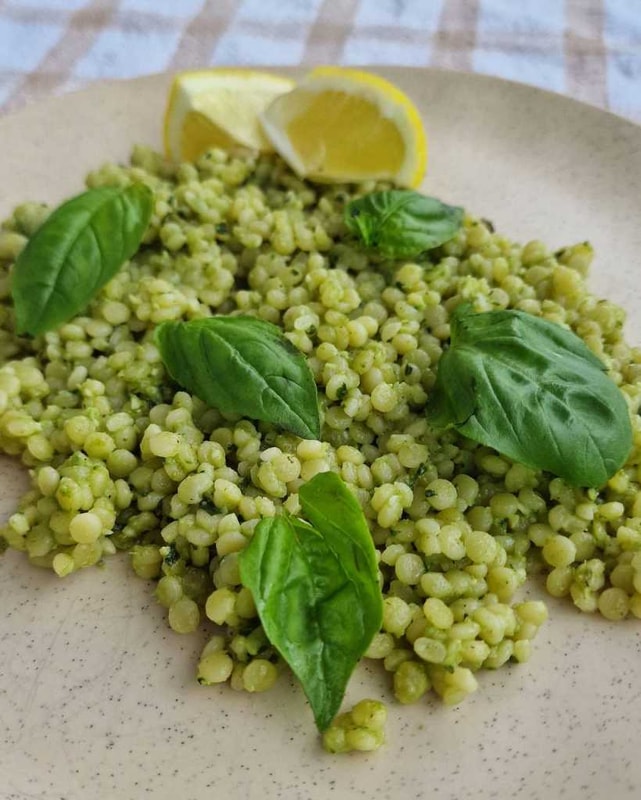
Cook the ptitim. Settle the water with some salt to boil. When the water started boiling, add the ptitim. Cook for 8–10 minutes, or until the ptitim is tender. Then drain it and set it aside. Prepare the pesto: In a food processor or blender, combine the basil leaves, Parmesan cheese, pine nuts, garlic, salt, and black pepper. Pulse until coarsely chopped. Gradually add the olive oil while continuing to pulse, until a smooth and creamy consistency is reached. Taste and adjust the seasoning if needed. Combine the dish: In a bowl, mix the ptitim with the homemade pesto, making sure to evenly coat the grains. Taste and adjust the seasoning as needed. Decorate with fresh basil leaves and lemon wedges and enjoy!
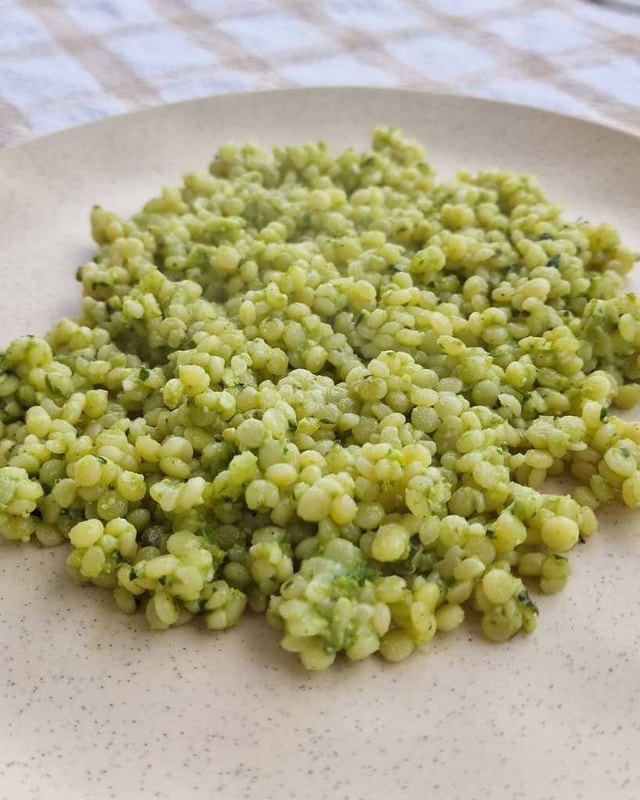
What does pesto ptitim pair well with?
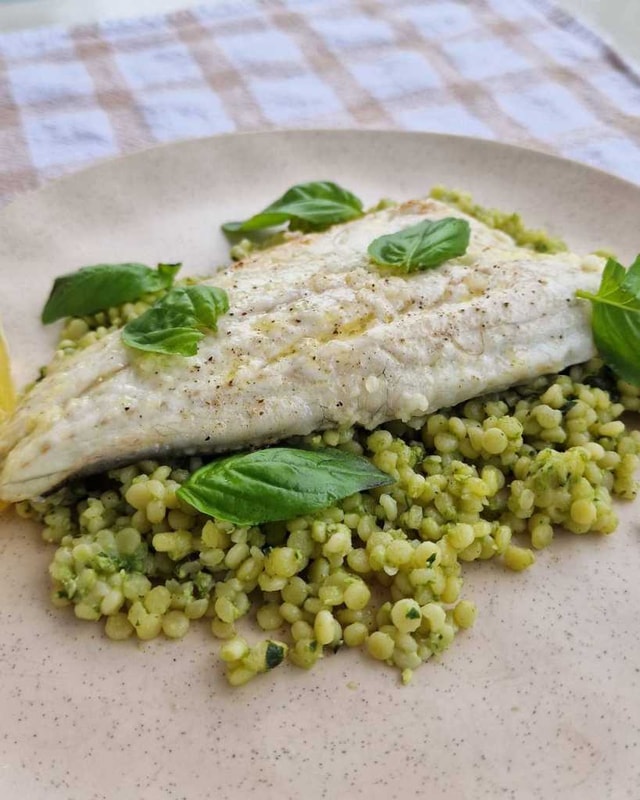
This Ptitim with Homemade Pesto can be served as a satisfying main course or as a side dish. Pesto ptitim pairs well with a variety of ingredients and dishes, making it a versatile option for different meal plans. Here are some suggestions for foods and flavors that complement pesto ptitim:
- Vegetables: Roasted or grilled vegetables such as cherry tomatoes, bell peppers, zucchini, eggplant, and asparagus can add color, flavor, and nutrients to the dish. You can also mix in fresh vegetables like cucumber, arugula, or baby spinach for a refreshing taste and added crunch.
- Protein: Pesto ptitim goes well with various protein sources, such as grilled or baked salmon, sea bass, shrimp, or tofu. Here are some great pairing recipes:
- Salad: Pesto ptitim can be used as a base for a hearty salad, mixed with fresh greens, chopped vegetables, and your choice of protein.
A Note from Chef Ana
This Ptitim (Israel couscous) with Homemade Pesto is a versatile side dish I frequently prepare for my private chef clients in The Woodlands and the Houston metro area. Drawing on my European culinary training, I love incorporating the bright, fresh flavors of the Mediterranean — quality olive oil, fresh herbs, and seasonal produce — all sourced locally here in Texas whenever possible.
Whether you are hosting a dinner party, planning a celebration, or simply want a wholesome meal for your family, I would love to bring this recipe — and many more — to your table. Feel free to reach out to learn more about my personal and private chef services in The Woodlands, Spring, Tomball, Conroe, and the greater Houston area.
Substitutions & Variations
As a personal chef who specializes in dietary accommodations, I always encourage my clients to adapt recipes to their individual needs. Here are some practical variations for this recipe:
- Gluten-Free: Ptitim is made from wheat, so swap it for gluten-free orzo, rice-shaped pasta, or cooked quinoa. All three hold pesto beautifully and offer a similar bite.
- Dairy-Free: Replace the Parmesan cheese with 2 tablespoons of nutritional yeast for a savory, cheesy depth. The rest of the recipe — olive oil, basil, pine nuts, garlic — is naturally dairy-free.
- Nut-Free: Substitute pine nuts with sunflower seeds or pumpkin seeds for a similar crunch without the allergen concern. Toasted sunflower seeds are an especially close match in flavor.
- Vegan-Friendly: Combine the dairy-free and vegan swaps: use nutritional yeast in place of Parmesan. The pesto will still be rich, fragrant, and full of flavor.
Frequently Asked Questions
What is ptitim and how is it different from regular couscous?
Ptitim, also called Israeli couscous or pearl couscous, is a toasted pasta made from wheat flour. Unlike North African couscous (which is tiny and grain-like), ptitim pearls are larger, chewier, and hold sauces beautifully. They were originally created in Israel in the 1950s as a rice substitute.
Can I make the pesto ahead of time?
Yes! Homemade pesto keeps well in the refrigerator for up to 5 days. Store it in an airtight jar with a thin layer of olive oil on top to prevent browning. You can also freeze pesto in ice cube trays for up to 3 months — just thaw and toss with freshly cooked ptitim.
Can I serve this dish cold as a pasta salad?
Absolutely! Ptitim with pesto makes an excellent cold pasta salad. Add cherry tomatoes, diced cucumber, and fresh mozzarella for a Mediterranean-inspired dish that is perfect for picnics, potlucks, or meal prep lunches.
Why does my homemade pesto turn brown?
Basil oxidizes quickly when exposed to air, causing the pesto to darken. To keep it vibrant green, blanch the basil leaves in boiling water for 5 seconds, then plunge them into ice water before blending. A thin layer of olive oil on top of stored pesto also helps prevent browning.
You Might Also Like
Love This Recipe?
Discover more delicious recipes and consider our personal chef services for fresh, healthy meals prepared in your home.