Puff Pastry Salmon (Salmon Wellington)
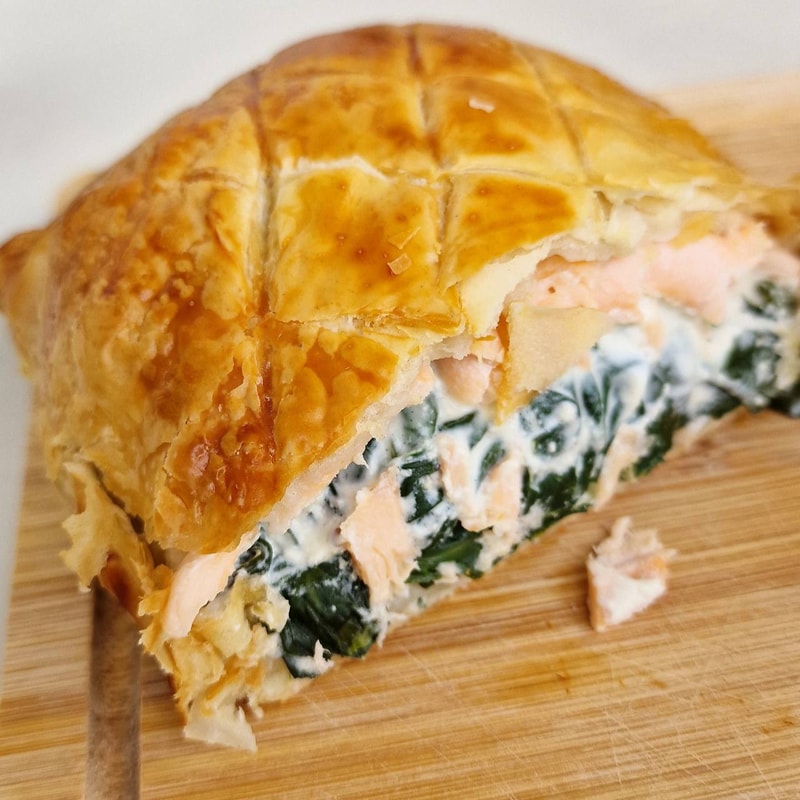
Puff Pastry Salmon or Salmon Wellington is a dish that features a salmon fillet wrapped in puff pastry, along with various fillings and seasonings. It can be suitable for an ordinary lunch as for a festive dinner.
Ingredients
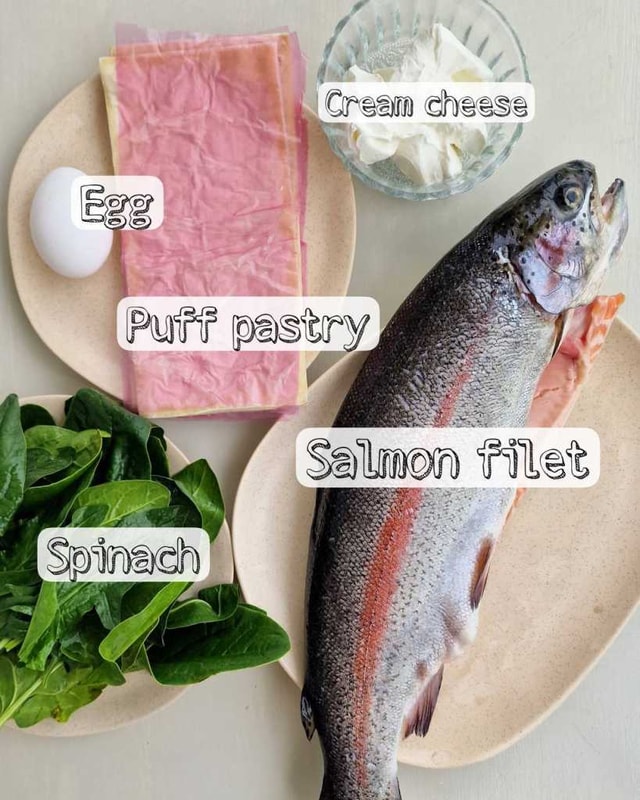
- 2 salmon fillets (skinless and boneless)
- 2 sheets of puff pastry, thawed according to package instructions
- 2 cups fresh spinach leaves
- 4 tbsp cream cheese
- Salt and pepper, to taste
- 1 1 egg, beaten (for egg wash)
Instructions
Preheat your oven to 400°F (200°C)).
Season the salmon fillets with salt and pepper to taste. Set them aside.
In a skillet, wilt the spinach leaves over medium heat until they are wilted and any excess moisture is evaporated. Add the cream cheese and stir, till smooth. Remove from heat and set aside.
On a lightly floured surface, roll out the thawed puff pastry sheet to a size that is large enough to wrap the salmon fillets completely.
Place one salmon fillet on the one side of the rolled-out puff pastry sheet. Spread 4 tablespoons of the cream cheese-spinach mixture over the salmon fillet gradually. Place the second salmon fillet on top of the spinach layer.
Cover the salmon with the other side of the puff pastry sheet, sealing the edges tightly. Trim off any excess pastry if necessary.
Transfer the wrapped salmon onto a baking sheet lined with parchment paper. Brush the surface of the puff pastry with the beaten egg, ensuring even coverage.
Bake in the preheated oven for the time indicated on the puff pastry package (about 15-20 minutes) or until the pastry is puffed and golden brown, and the salmon is cooked to your desired doneness. Once baked, remove from the oven and allow it to cool for a few minutes before slicing and serving. Enjoy!
Chef's Tips & Notes
Recipe Details
Recipe Tags
Puff Pastry Salmon or Salmon Wellington is a dish that features a salmon fillet wrapped in puff pastry, along with various fillings and seasonings. It can be suitable for an ordinary lunch as for a festive dinner.
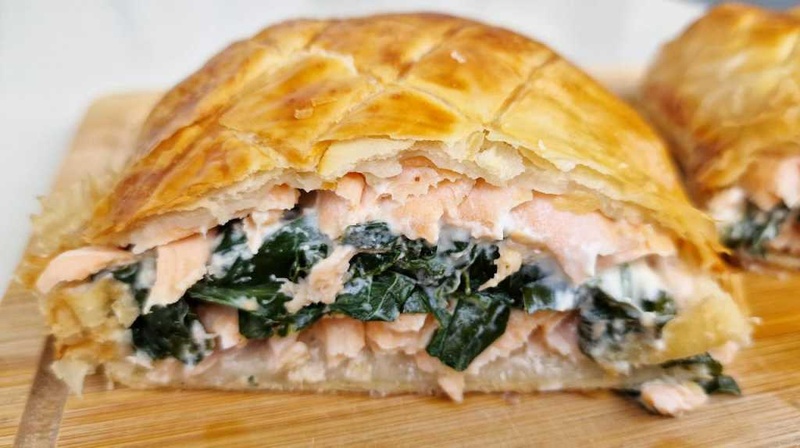
Why is a salmon Wellington called a Wellington?
Salmon Wellington is named after the famous dish called Beef Wellington. The origin of the name “Wellington” is attributed to Arthur Wellesley, the 1st Duke of Wellington, who was a British military hero and statesman in the early 19th century. However, the exact reason why the dish is associated with his name is not entirely clear.
One popular theory suggests that Beef Wellington was named in honor of the Duke of Wellington because it was one of his favorite dishes. According to this theory, the dish was created by his personal chef to pay tribute to the Duke’s victory at the Battle of Waterloo in 1815. It is said that the dish was created as a luxurious and celebratory centerpiece.
Over time, the concept of Wellington-style preparations expanded beyond beef and began to include other proteins, such as fish like salmon. The term “Wellington” in dishes like Salmon Wellington refers to the cooking method of encasing the main ingredient in a pastry crust.
In the case of Salmon Wellington, the salmon fillet is wrapped in puff pastry, similar to how beef is encased in pastry in the traditional Beef Wellington. The name “Wellington” is used to indicate the preparation style and the resemblance to the original dish.
While the exact reason for the association with the Duke of Wellington remains somewhat uncertain, the name has become widely recognized and is used to describe dishes that feature a protein wrapped in pastry, such as Salmon Wellington.
What is Puff Pastry Salmon made of?
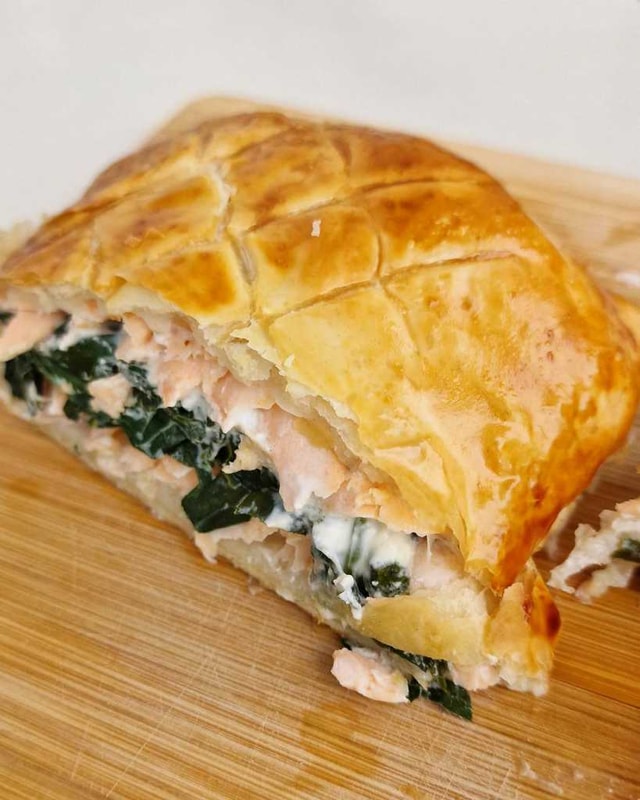
Puff pastry salmon, also known as salmon en croûte, is a dish that consists of salmon fillets encased in puff pastry. Here’s an overview of the main ingredients used:
- Salmon fillets: Fresh or thawed salmon fillets are the star of the dish. Skinless and boneless salmon fillets are typically used for ease of preparation and serving.
- Puff pastry: Puff pastry is a light and flaky pastry made by repeatedly layering butter between thin sheets of dough. It puffs up during baking, creating a crisp and golden crust. Puff pastry provides a delicious and visually appealing enclosure for the salmon.
- Filling and seasonings: The salmon fillets are often seasoned with salt, pepper, and other herbs or spices according to personal taste. Optional fillings can be added between the salmon and the puff pastry to enhance the flavors. Common fillings include spinach and cream cheese. These fillings add moisture and additional layers of flavor to the dish.
- Egg wash: An egg wash made by whisking an egg with a little water or milk is typically brushed onto the puff pastry before baking. It helps give the pastry a beautiful golden color and adds a shiny finish.
Puff pastry salmon is a visually impressive and flavorful dish that can be served as an elegant main course for special occasions or as a delightful addition to a dinner menu.
How to make Puff Pastry Salmon?
Preheat your oven to the temperature specified on the puff pastry package instructions (around 400°F (200°C)). Season the salmon fillets with salt and pepper to taste. Set them aside.
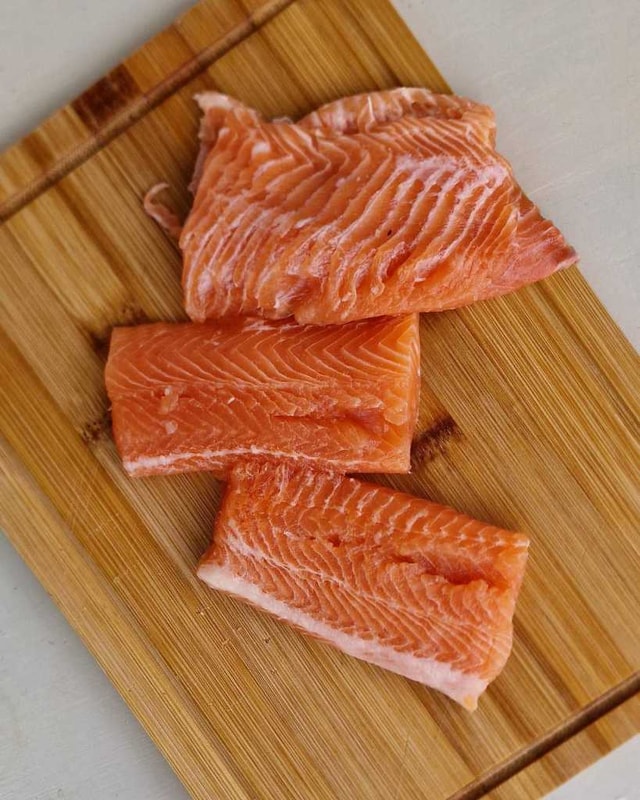 In a skillet, wilt the spinach leaves over medium heat until they are wilted and any excess moisture is evaporated.
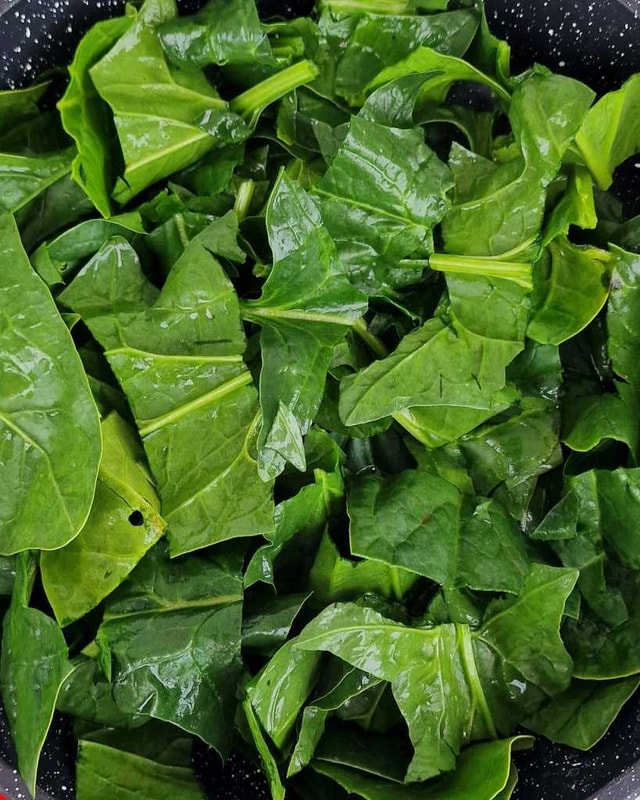 Add the cream cheese and stir, till smooth. Remove from heat and set aside.
Place one salmon fillet on the one side of the rolled-out puff pastry sheet. Spread the cream cheese-spinach mixture over the salmon fillet gradually. Place the second salmon fillet on top of the spinach layer.
Add the cream cheese and stir, till smooth. Remove from heat and set aside.
Place one salmon fillet on the one side of the rolled-out puff pastry sheet. Spread the cream cheese-spinach mixture over the salmon fillet gradually. Place the second salmon fillet on top of the spinach layer.
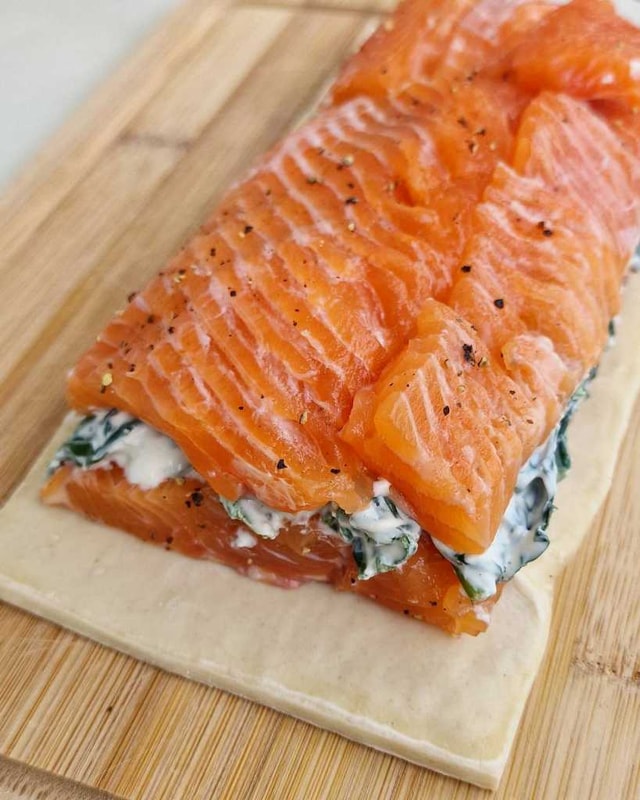 Cover the salmon with the other side of the puff pastry sheet, sealing the edges tightly. Trim off any excess pastry if necessary. Brush the surface of the puff pastry with the beaten egg, ensuring even coverage.
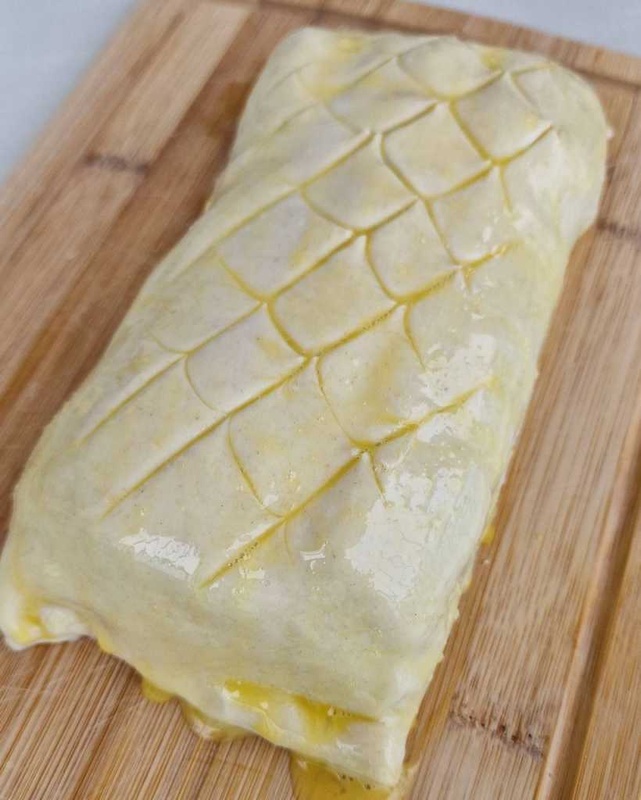 Transfer the wrapped salmon onto a baking sheet lined with parchment paper. Bake in the preheated oven for the time indicated on the puff pastry package (about 15–20 minutes) or until the pastry is puffed and golden brown, and the salmon is cooked to your desired doneness. Once baked, remove from the oven and allow it to cool for a few minutes before slicing and serving.
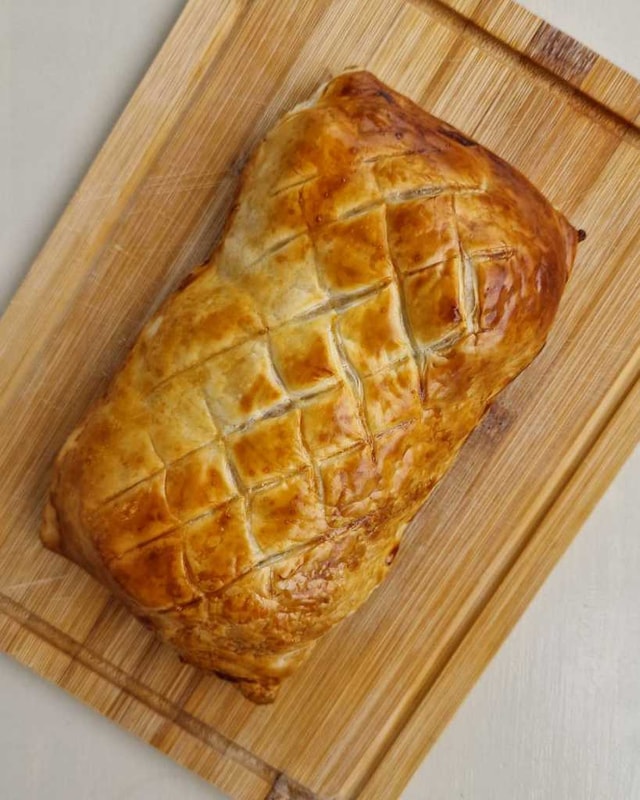 Puff pastry salmon with spinach and cream cheese layer is a delicious and visually impressive dish that can be enjoyed as a special main course. Serve it alongside your favorite sides and enjoy!
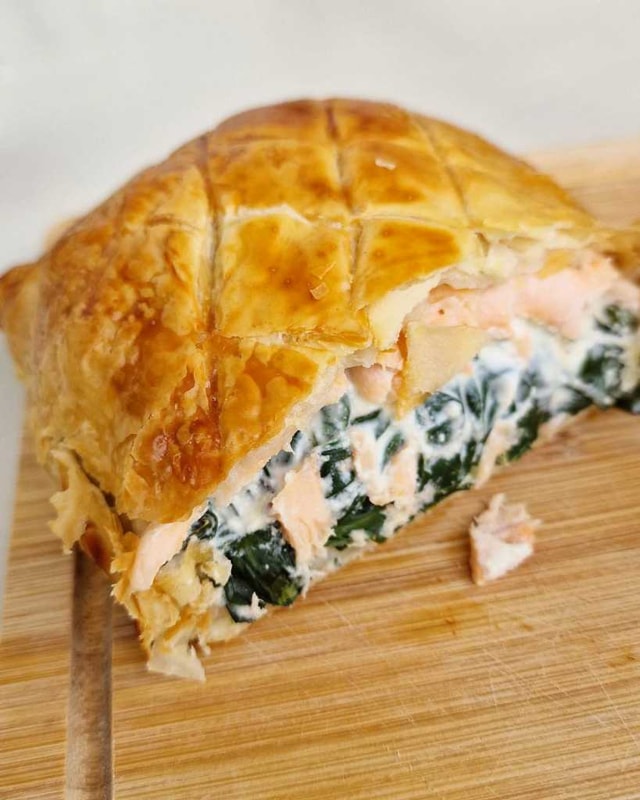
What to serve Salmon Wellington with?
Salmon Wellington pairs well with a variety of side dishes that complement its flavors and add a balanced and complete meal. Here are some ideas for side dishes to serve with salmon Wellington:
- Roasted Vegetables: Roasted vegetables such as asparagus, broccoli, carrots, or Brussels sprouts provide a flavorful and nutritious accompaniment to salmon Wellington. Here is the recipe for Parmesan Baked Asparagus that complements Salmon Wellington well.
- Lemon-Dill Rice: Prepare a fragrant and tangy lemon-dill rice to serve alongside the salmon Wellington. Cook rice according to package instructions and then stir in freshly squeezed lemon juice, chopped dill, salt, and pepper. This light and aromatic rice will complement the flavors of the salmon.
- Steamed Green Beans: Steam fresh green beans until crisp-tender and toss them with a little butter, lemon zest, and salt. The bright and vibrant green beans add freshness and crunch to the meal.
- Mixed Green Salad: Create a refreshing mixed green salad with a variety of fresh greens, such as baby spinach, arugula, or mesclun. Add cherry tomatoes, cucumbers, and a light vinaigrette dressing for a crisp and refreshing side. Here are some great salad pairings:
- Citrus Salad: Prepare a citrus salad with segments of oranges, grapefruits, or blood oranges, along with thinly sliced red onions, fennel, and a citrusy dressing. The bright and tangy flavors of the salad complement the richness of the salmon. Here are the recipes for citrus salads:
These are just a few suggestions, and you can mix and match side dishes based on your personal preferences.
A Note from Chef Ana
This Puff Pastry Salmon (Salmon Wellington) is a dish I absolutely love preparing for my private dinner clients in The Woodlands and the greater Houston area. My philosophy has always been about elevating classic American comfort food with proper technique and the freshest local Texas ingredients. I source as much as I can from local farms and markets in the Houston area, because fresh, seasonal produce always makes a noticeable difference.
Whether you are hosting a dinner party, planning a celebration, or simply want a wholesome meal for your family, I would love to bring this recipe — and many more — to your table. Feel free to reach out to learn more about my personal and private chef services in The Woodlands, Spring, Tomball, Conroe, and the greater Houston area.
Substitutions & Variations
As a personal chef who specializes in dietary accommodations, I always encourage my clients to adapt recipes to their individual needs. Here are some practical variations for this recipe:
- Gluten-Free: Use a gluten-free puff pastry sheet — several good brands are now widely available. The rest of the recipe (salmon, spinach, cream cheese, egg wash) is naturally gluten-free.
- Dairy-Free: Replace the cream cheese with a dairy-free cream cheese alternative — cashew-based varieties melt and spread especially well. Use a plant-based butter to brush the pastry if desired.
- Vegetarian: Skip the salmon and create a Mushroom Wellington instead — fill the puff pastry with sautéed mushrooms, spinach, and cream cheese for an equally impressive centerpiece.
Frequently Asked Questions
How do I prevent the puff pastry from getting soggy on the bottom?
The key is removing excess moisture from the spinach filling — squeeze it thoroughly after wilting. Also, make sure your oven is fully preheated to 400°F before baking, and place the Wellington on the lower third of the oven so the bottom crisps up properly.
Can I assemble Salmon Wellington ahead of time?
Yes! Assemble the Wellington completely, wrap it tightly in plastic wrap, and refrigerate for up to 8 hours before baking. In fact, chilling the assembled Wellington helps the pastry hold its shape better. Add the egg wash just before it goes into the oven.
How do I know when the salmon inside is done?
Use an instant-read thermometer inserted through the pastry into the center of the salmon — it should read 145°F (63°C). The pastry should be puffed and deep golden brown, which usually takes 15 to 20 minutes at 400°F.
Can I use frozen puff pastry for this recipe?
Absolutely! Frozen puff pastry works perfectly. Just thaw it in the refrigerator overnight or on the counter for about 30 minutes until it is pliable but still cold. Avoid over-thawing, as the pastry becomes sticky and difficult to work with.
You Might Also Like
Love This Recipe?
Discover more delicious recipes and consider our personal chef services for fresh, healthy meals prepared in your home.