Salmon Onigiri
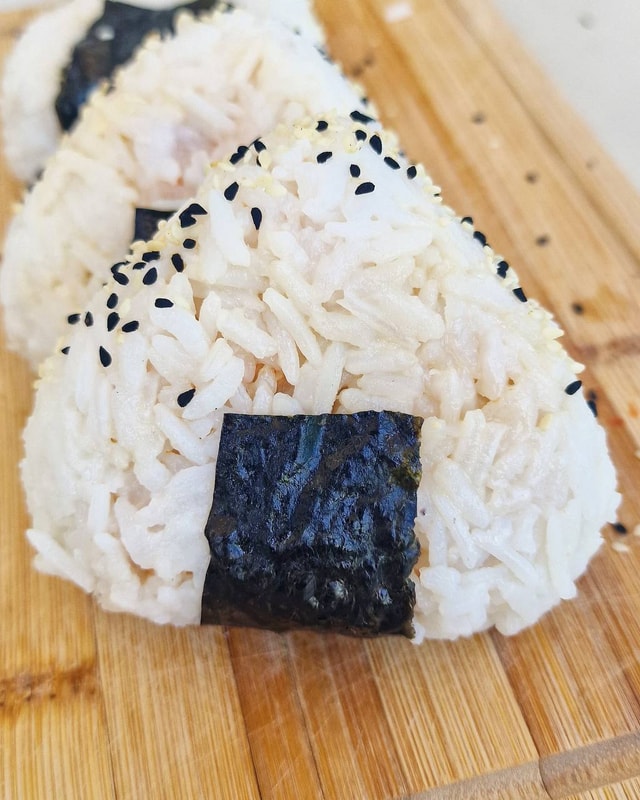
Salmon Onigiri is a traditional Japanese dish made with sushi rice and a savory salmon filling. The word "onigiri" refers to rice balls, which are usually shaped into triangles or rounds and filled with various ingredients.
Ingredients
- 1 cup sushi rice
- 2 cups water
- 2 tbsp rice vinegar
- 1 tbsp sugar
- 1 tsp salt
- 8 oz. salmon
- salt and pepper, to taste
- 2 tbsp soy sauce
- 1 tbsp honey
- 1 tsp sesame oil
- Nori seaweed sheets, cut into small strips for wrapping
- mixed sesame seeds
Instructions
Rinse the sushi rice in cold water until the water runs clear. Drain the rice and place it in a rice cooker or a saucepan with 2 cups of water. Cook the rice according to package instructions.
Cook the salmon. Arrange the salmon filet on the baking sheet lined with baking paper. Season with salt and pepper and bake in the preheated to 180°C (350°F) oven for 15 minutes. Then take it out, let it cool and flake it with the fork.
In a small bowl, mix the rice vinegar, sugar, and salt until the sugar and salt dissolve. Once the rice is cooked, transfer it to a large mixing bowl, and while it's still warm, drizzle the vinegar mixture over the rice. Gently fold the rice to evenly coat it with the seasoning. Let the rice cool to room temperature.
In a bowl, mix soy sauce, honey, and sesame oil. Add cooked flaked salmon. Stir until the salmon is well coated with the sauce.
Wet your hands to prevent sticking, take a handful of seasoned sushi rice, and flatten it in the palm of your hand. Place a spoonful of the salmon mixture in the center of the rice. Gather the rice around the salmon to enclose it fully and shape the onigiri into a triangle or ball.
Wrap the formed onigiri with a strip of nori seaweed to hold it together and provide an easy handle for eating. Serve the Salmon Onigiri immediately or pack them for a delicious and portable meal. Enjoy!
Chef's Tips & Notes
Recipe Details
Recipe Tags
Salmon Onigiri is a traditional Japanese dish made with sushi rice and a savory salmon filling. The word “onigiri” refers to rice balls, which are usually shaped into triangles or rounds and filled with various ingredients.
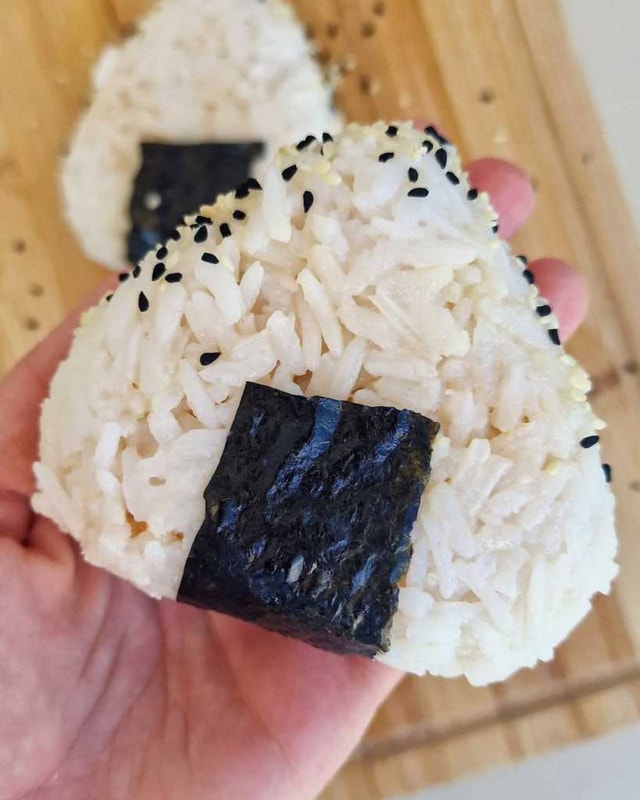
What is salmon onigiri filled with?
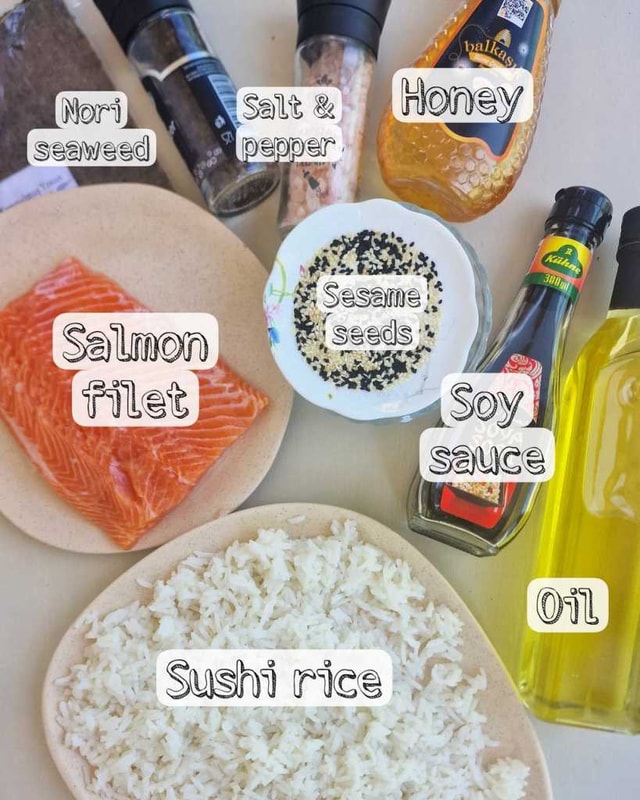
Here’s a description of each ingredient for Salmon Onigiri:
- Salmon: Salmon provides a delicious and nutritious protein-rich filling for the onigiri. It’s typically cooked and seasoned beforehand.
- Salt, pepper: Needed for baking salmon filet.
- Soy sauce: Adds a savory and umami flavor to the salmon, making it more flavorful.
- Honey: Balances the salty soy sauce and adds a subtle touch of sweetness to the salmon.
- Oil: Infuses the salmon with a rich nutty flavor and aroma, elevating the overall taste of the filling.
- Nori seaweed sheets: A type of dried seaweed used to wrap the onigiri, giving them structure and providing a delightful umami taste.
Is onigiri healthy?
This salmon onigiri recipe can be considered healthy, especially when compared to many other snack and meal options. It includes nutritious ingredients like sushi rice, salmon, nori seaweed, soy sauce, honey, and sesame oil. Let’s break down the health aspects of each ingredient:
- Sushi rice: While white rice is a refined grain, sushi rice is usually seasoned with rice vinegar, sugar, and salt, which adds flavor but also increases its calorie content. However, as part of a balanced diet and when consumed in moderation, sushi rice can provide energy and some essential nutrients.
- Salmon: Salmon is an excellent source of high-quality protein and heart-healthy omega-3 fatty acids. It provides essential nutrients like vitamin D, B vitamins, and selenium.
- Nori seaweed: Nori is a type of seaweed and is low in calories. It contains essential minerals like iodine, calcium, and iron, making it a good addition to the diet.
- Soy sauce: While soy sauce adds flavor to the onigiri, it’s relatively high in sodium. Using it in moderation can be fine, but it’s essential to be mindful of overall sodium intake, especially if you have high blood pressure or other health concerns.
- Honey: Honey is a natural sweetener and adds a touch of sweetness to the salmon filling. It’s a better alternative to refined sugar and can provide some antioxidants.
- Sesame oil: Sesame oil adds a delightful nutty flavor to the filling. It’s a source of healthy fats and antioxidants.
This salmon onigiri recipe can be a wholesome and tasty choice, particularly when balanced with a variety of other nutritious foods in your diet.
How to make salmon onigiri?
First, rinse the sushi rice under cold water until the water runs clear. Drain the rice and cook it in a rice cooker or saucepan with 2 cups of water, following the package instructions.
Cook the salmon. Arrange the salmon filet on the baking sheet lined with baking paper. Season with salt and pepper and bake in the preheated to 180°C (350°F) oven for 15 minutes.
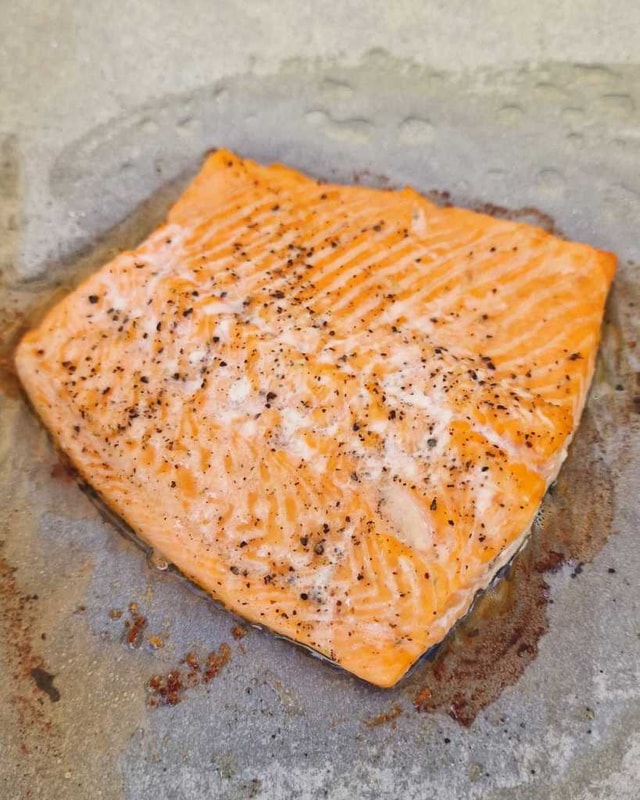 Then take it out, let it cool and flake it with the fork.
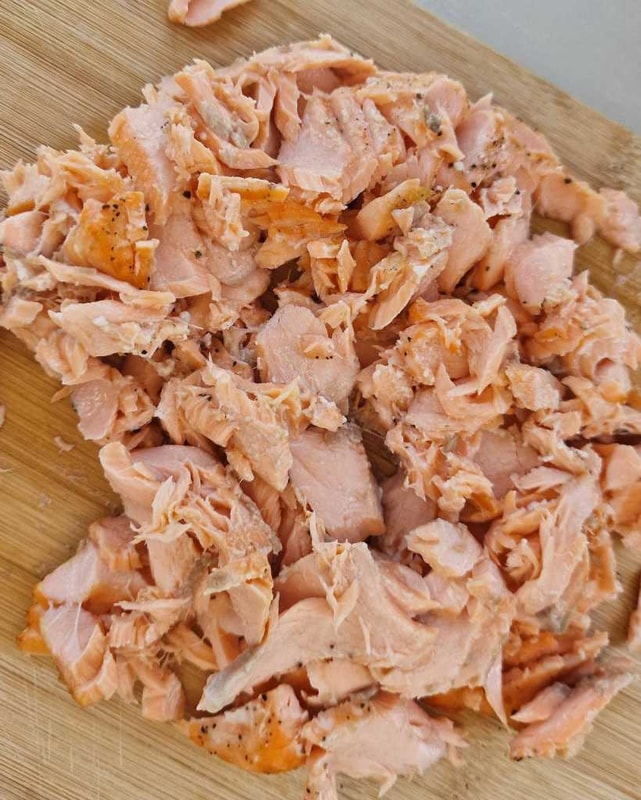 While the rice is still warm, prepare the seasoning by mixing rice vinegar, sugar, and salt in a small bowl until the sugar and salt dissolve. Transfer the cooked rice to a large mixing bowl and gently drizzle the vinegar mixture over it. Fold the rice to ensure it’s evenly coated with the seasoning, and allow it to cool to room temperature.
In a separate bowl, combine soy sauce, honey, and sesame oil. Add the cooked flaked salmon to the mixture and stir until the salmon is thoroughly coated.
To assemble the onigiri, dampen your hands to prevent sticking. Take a handful of seasoned sushi rice and flatten it in your palm. Place a spoonful of the salmon mixture in the center of the rice, then gather the rice around the salmon, enclosing it completely. Shape the onigiri into a triangle or ball.
While the rice is still warm, prepare the seasoning by mixing rice vinegar, sugar, and salt in a small bowl until the sugar and salt dissolve. Transfer the cooked rice to a large mixing bowl and gently drizzle the vinegar mixture over it. Fold the rice to ensure it’s evenly coated with the seasoning, and allow it to cool to room temperature.
In a separate bowl, combine soy sauce, honey, and sesame oil. Add the cooked flaked salmon to the mixture and stir until the salmon is thoroughly coated.
To assemble the onigiri, dampen your hands to prevent sticking. Take a handful of seasoned sushi rice and flatten it in your palm. Place a spoonful of the salmon mixture in the center of the rice, then gather the rice around the salmon, enclosing it completely. Shape the onigiri into a triangle or ball.
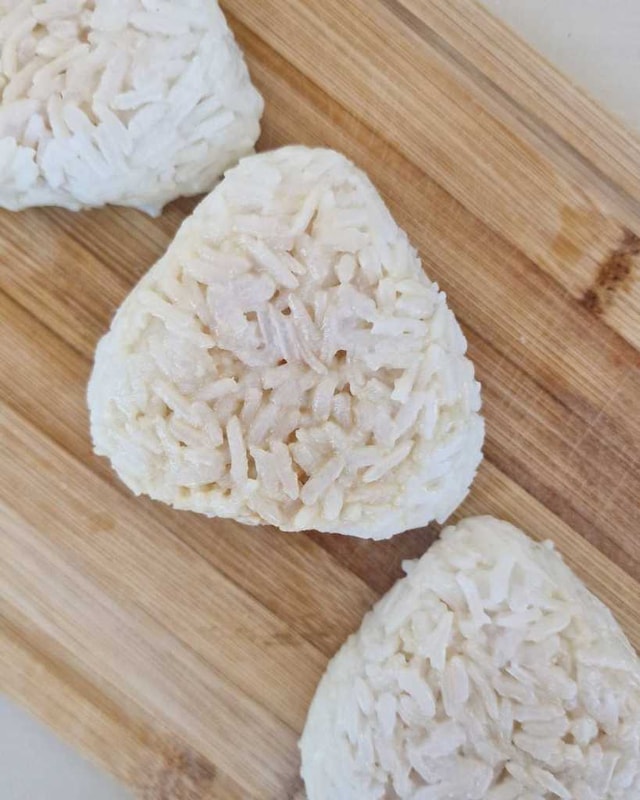 Finally, wrap each formed onigiri with a strip of nori seaweed to hold it together and create a convenient handle for eating. Serve the Salmon Onigiri immediately or pack them for a delicious and portable meal. Enjoy this flavorful and satisfying Japanese treat!
If you like onigiri, check out this Spicy Tuna Onigiri recipe!
Finally, wrap each formed onigiri with a strip of nori seaweed to hold it together and create a convenient handle for eating. Serve the Salmon Onigiri immediately or pack them for a delicious and portable meal. Enjoy this flavorful and satisfying Japanese treat!
If you like onigiri, check out this Spicy Tuna Onigiri recipe!
A Note from Chef Ana
This Salmon Onigiri is a dish I absolutely love preparing for my private dinner clients in The Woodlands and the greater Houston area. Japanese cuisine is all about precision, balance, and respecting the integrity of each ingredient — values that resonate deeply with my culinary philosophy. I love bringing these refined techniques to my clients’ tables using the best ingredients I can source here in Texas.
Whether you are hosting a dinner party, planning a celebration, or simply want a wholesome meal for your family, I would love to bring this recipe — and many more — to your table. Feel free to reach out to learn more about my personal and private chef services in The Woodlands, Spring, Tomball, Conroe, and the greater Houston area.
Substitutions & Variations
As a personal chef who specializes in dietary accommodations, I always encourage my clients to adapt recipes to their individual needs. Here are some practical variations for this recipe:
- Gluten-Free: This recipe is naturally gluten-free! Just use tamari instead of regular soy sauce to keep it certified gluten-free. All other ingredients — sushi rice, salmon, nori, honey, and sesame oil — are free of gluten.
- Dairy-Free: This recipe is naturally dairy-free as written. There are no dairy products in any of the ingredients.
- Vegetarian/Vegan: Replace the salmon filling with seasoned marinated tofu, roasted sweet potato, or umeboshi (pickled plum). For the sauce, swap honey for maple syrup or agave to keep it fully vegan.
- Soy-Free: Replace soy sauce with coconut aminos for a soy-free alternative that still delivers a rich umami flavor.
Frequently Asked Questions
Can I make onigiri ahead of time?
Yes! Shaped onigiri can be wrapped individually in plastic wrap and stored in the refrigerator for up to 24 hours. Keep the nori separate and wrap it around each onigiri just before eating so it stays crisp. You can also freeze assembled onigiri (without nori) for up to a month — thaw in the refrigerator overnight.
Why does the rice keep sticking to my hands?
Keep a small bowl of water with a splash of rice vinegar nearby and wet your hands between each onigiri. This prevents sticking without affecting the flavor. Make sure your rice is warm rather than hot — very hot rice is much harder to handle.
Can I use regular rice instead of sushi rice?
Sushi rice (short-grain Japanese rice) works best because its natural stickiness holds the onigiri together. Regular long-grain rice like jasmine or basmati does not have enough starch to bind properly. If sushi rice is unavailable, any short-grain or medium-grain rice is a good substitute.
What other fillings can I use besides salmon?
Classic onigiri fillings include spicy tuna, pickled plum (umeboshi), seasoned kelp, teriyaki chicken, or even cream cheese with salmon roe. You can also try avocado with a drizzle of soy sauce, or grilled shrimp with a touch of sriracha mayo for a modern twist.
You Might Also Like
Love This Recipe?
Discover more delicious recipes and consider our personal chef services for fresh, healthy meals prepared in your home.