Salmon Pesto Pasta
Salmon Pesto Pasta recipe allows you to enjoy the vibrant flavors of homemade pesto sauce paired with tender salmon and pasta. It's a perfect combination of flavors!
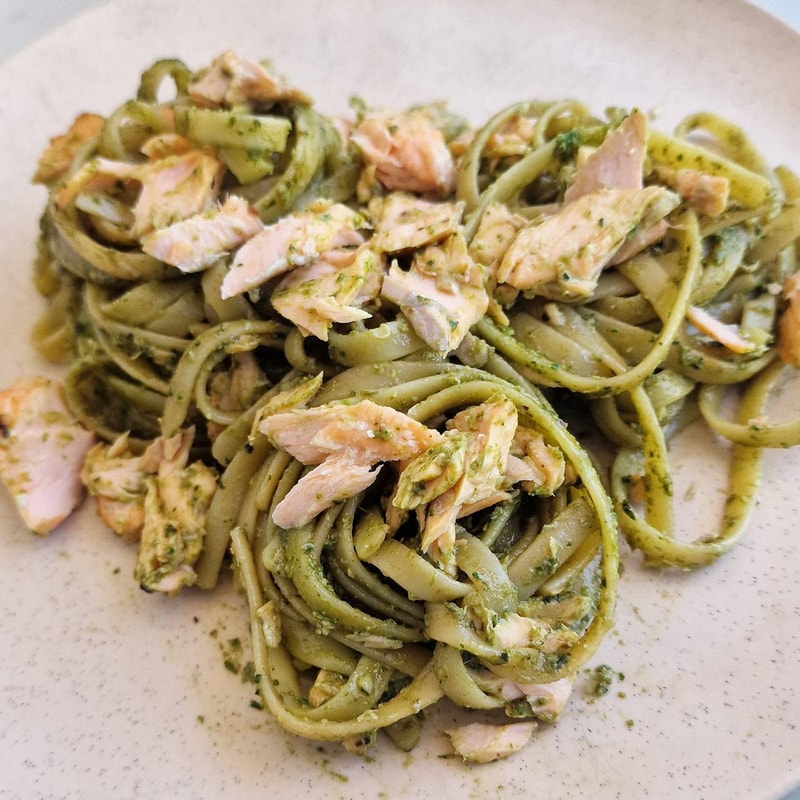
Ingredients
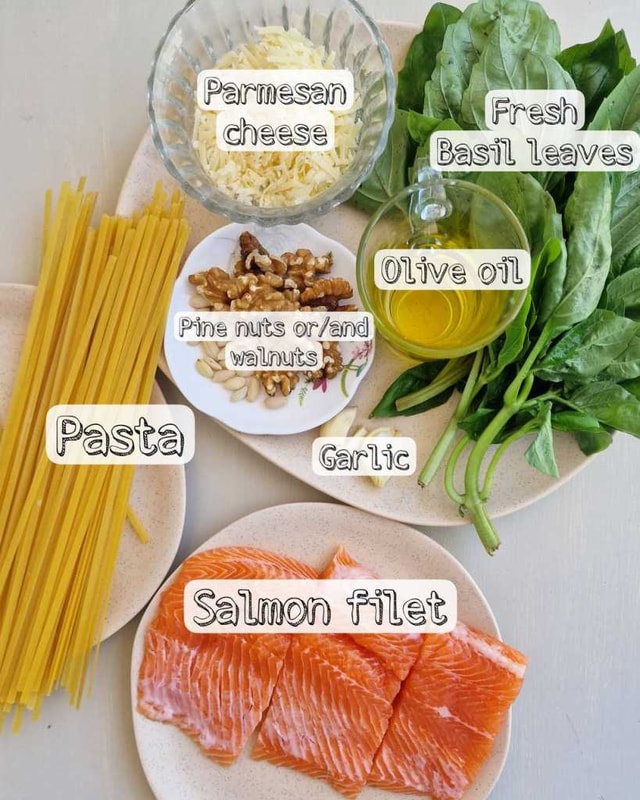
- 4 oz. pasta of your choice
- water + salt
- 8 oz. salmon fillets, skin removed
- Salt and pepper, to taste
- 1 tbsp olive oil
- 1 cup fresh basil leaves
- 1/4 cup grated Parmesan cheese
- 2 tbsp pine nuts (or walnuts as alternative)
- 1 garlic clove, minced
- 1/4 cup extra-virgin olive oil
- Salt and pepper, to taste
Instructions
Cook the pasta according to package instructions until al dente. Drain and set aside.
Preheat the oven to 400°F (200°C). Season the salmon fillets with salt and pepper and brush them with olive oil. Place salmon filets on the baking sheet lined with baking paper. Bake them in the oven for 10 minutes or until cooked through and flaky. Remove the salmon from the oven and set aside.
Prepare the pesto sauce. In a food processor or blender, combine the basil leaves, grated Parmesan cheese, pine nuts (or walnuts), minced garlic, salt, and pepper. Pulse several times until the ingredients are roughly chopped. Drizzle in the extra-virgin olive oil until the mixture is smooth and well combined. Adjust the salt and pepper to taste.
In the same skillet, where the salmon was cooked, add the cooked pasta and pesto sauce. Toss well to coat the pasta evenly with the pesto.
Flake the cooked salmon into bite-sized pieces and add it to the skillet. Gently mix everything together until the salmon is well incorporated into the pasta. Cook for an additional 1-2 minutes, stirring gently, to warm up the salmon and ensure all the flavors are combined. Remove from heat and serve the salmon pesto pasta hot. Garnish with grated Parmesan cheese, halved cherry tomatoes, or fresh basil leaves for extra flavor and visual appeal!
Chef's Tips & Notes
Recipe Details
Recipe Tags
This Salmon Pesto Pasta recipe allows you to enjoy the vibrant flavors of homemade pesto sauce paired with tender salmon and pasta. It’s a perfect combination of flavors!
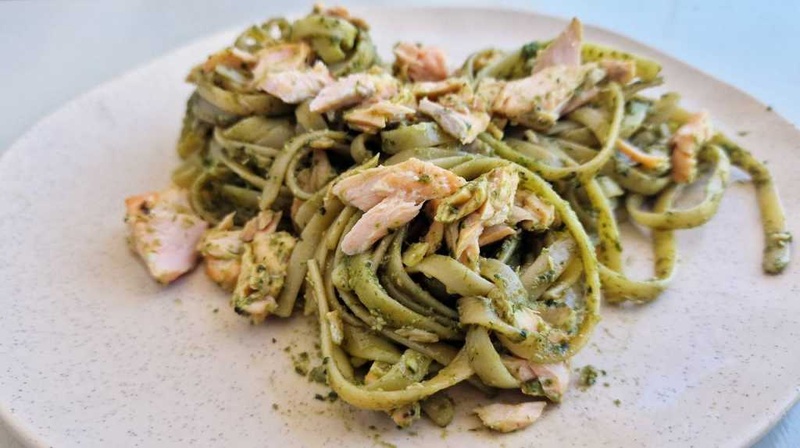
What is salmon pesto pasta made of?
Salmon pesto pasta typically consists of the following ingredients:
- Salmon Fillets: Fresh salmon fillets are the star ingredient, providing a rich and tender seafood element to the dish.
- Pasta: Any type of pasta can be used, such as spaghetti, linguine, fusilli, or your preferred pasta shape. It serves as the base and adds a satisfying texture.
- Pesto Sauce: Pesto sauce is a flavorful mixture made from fresh basil leaves, garlic, pine nuts (or sometimes walnuts), grated Parmesan cheese, and olive oil. It provides a vibrant, herby taste to the dish.
- Olive Oil: Used for cooking the salmon and tossing the pasta. It adds moisture and flavor to the overall dish.
- Salt and Pepper: These common seasonings are used to enhance the flavor of the salmon and the overall dish.
Optional ingredients for garnishing or added flavor:
- Grated Parmesan Cheese: Adds a savory and nutty flavor to the dish. It is commonly sprinkled on top of the pasta before serving.
- Fresh Basil Leaves: Used as a garnish or can be mixed into the pasta for an additional burst of basil flavor.
These ingredients come together to create a delicious Salmon Pesto Pasta!
Is pesto unhealthy or healthy?
Pesto can be a healthy addition to meals when consumed in moderation and prepared with nutritious ingredients. Here are some factors to consider:
- Nutrient-rich Ingredients: Traditional pesto sauce is made with fresh basil, garlic, pine nuts or walnuts, olive oil, and grated Parmesan cheese. These ingredients offer various vitamins, minerals, healthy fats, and antioxidants.
- Heart-Healthy Fats: Olive oil, a key component of pesto, contains monounsaturated fats, which are considered heart-healthy fats. These fats can help improve cholesterol levels and reduce the risk of heart disease when consumed in moderation.
- Plant-Based Ingredients: Pesto is primarily made from plant-based ingredients like basil and nuts, making it suitable for vegetarian and vegan diets.
- Sodium Content: Store-bought pesto sauces may contain added salt, so it’s advisable to read labels and choose lower-sodium options. Additionally, making homemade pesto allows you to control the amount of salt added.
Incorporating pesto into a well-balanced diet that includes a variety of nutrient-rich foods is generally considered a healthy choice.
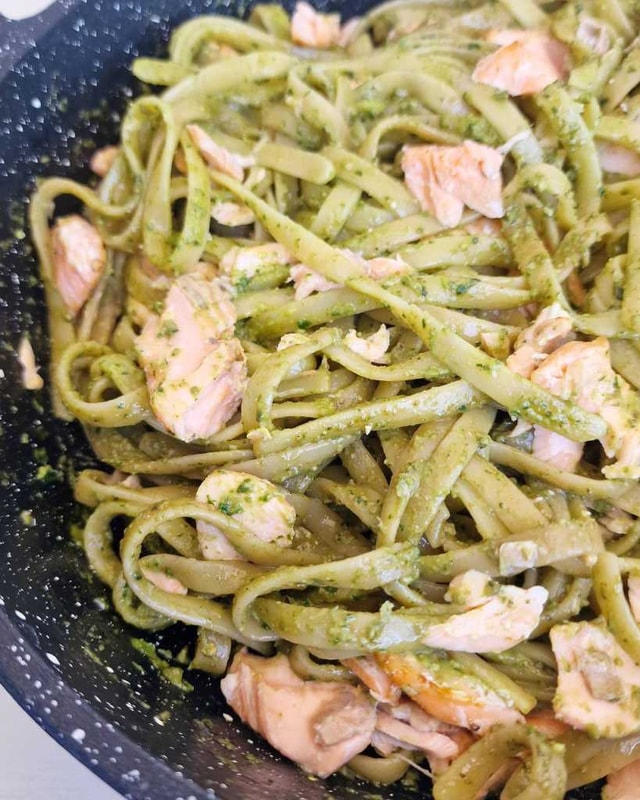
How to make salmon pesto pasta?
Cook the pasta. Cook the pasta according to package instructions until al dente. Drain and set aside.
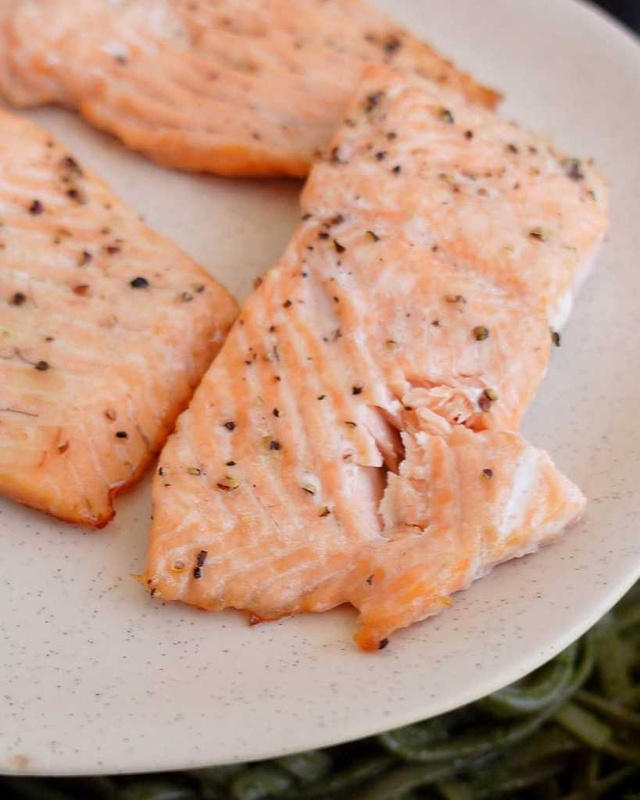
Prepare the salmon. Preheat the oven to 400°F (200°C). Season the salmon fillets with salt and pepper and brush them with olive oil. Place salmon filets on the baking sheet lined with baking paper. Bake them in the oven for 10 minutes or until cooked through and flaky. Remove the salmon from the oven and set aside.
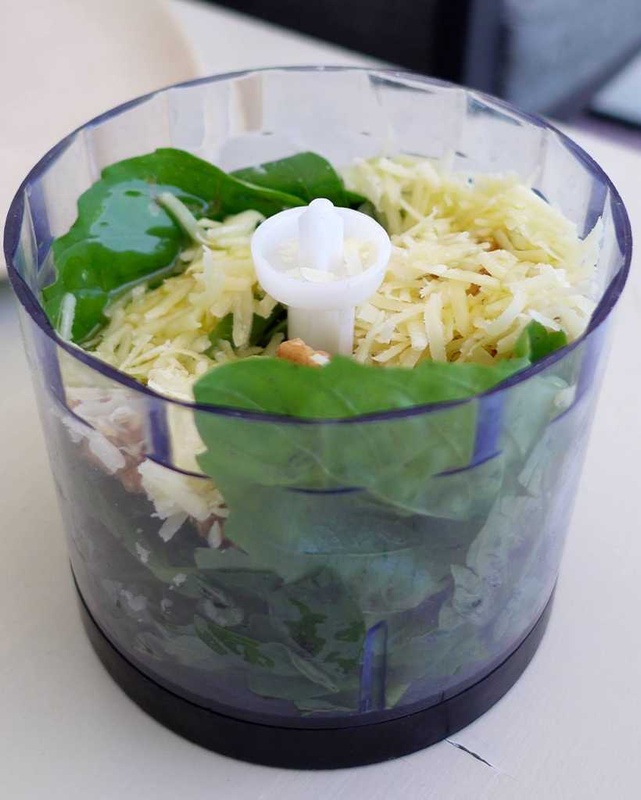
 Make the pesto sauce. In a food processor or blender, combine the basil leaves, grated Parmesan cheese, pine nuts (or walnuts), minced garlic, salt, and pepper.
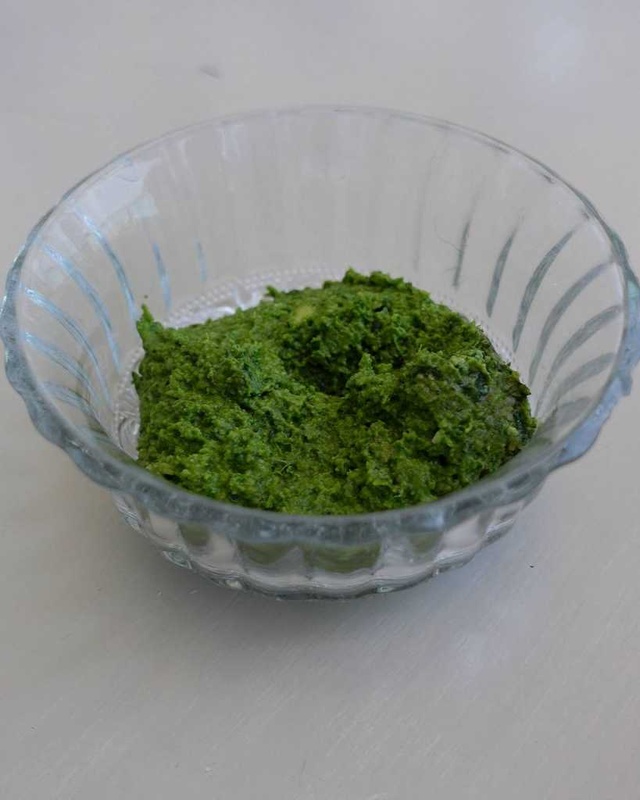
 Pulse several times until the ingredients are roughly chopped. Drizzle in the extra-virgin olive oil until the mixture is smooth and well combined. Adjust the salt and pepper to taste.
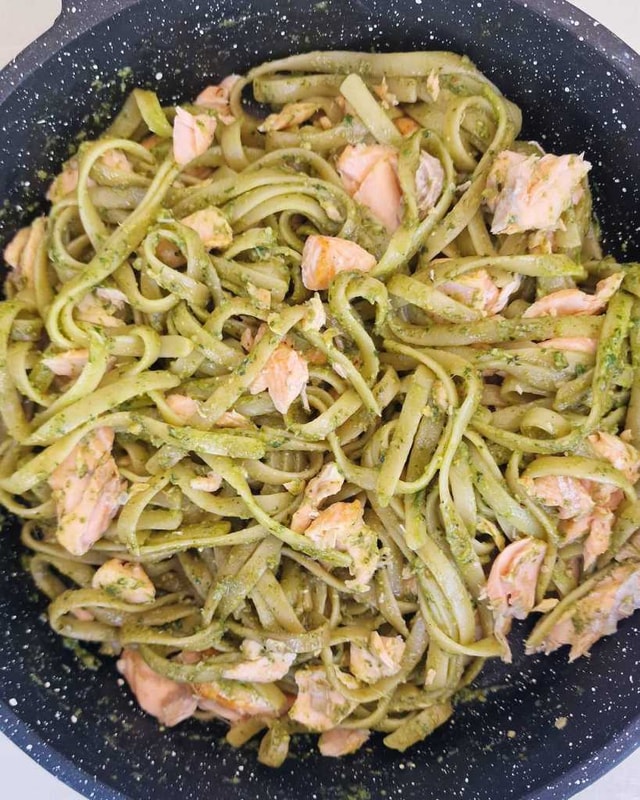
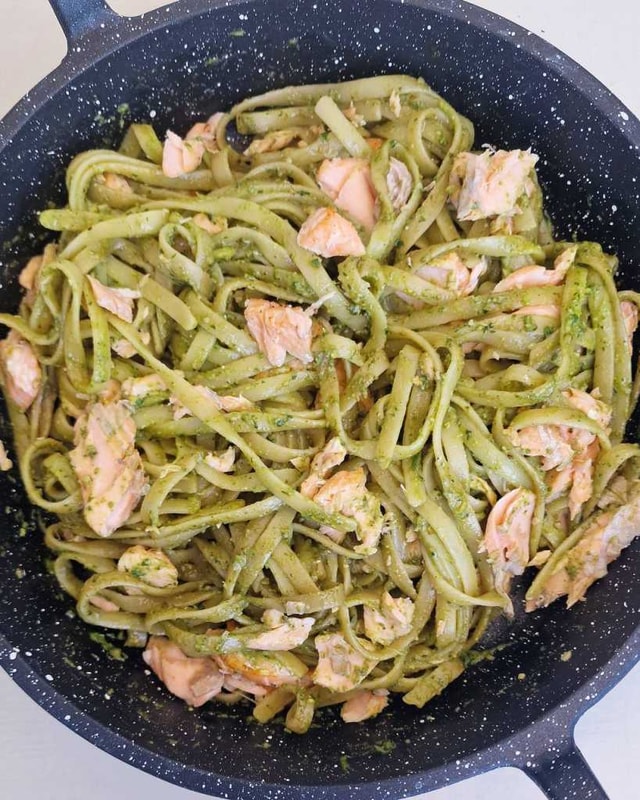
 Assemble the dish. In the same skillet, where the salmon was cooked, add the cooked pasta and pesto sauce. Toss well to coat the pasta evenly with the pesto. Flake the cooked salmon into bite-sized pieces and add it to the skillet. Gently mix everything together until the salmon is well incorporated into the pasta. Cook for an additional 1–2 minutes, stirring gently, to warm up the salmon and ensure all the flavors are combined. Remove from heat and serve the salmon pesto pasta hot.
 Serve and enjoy. Garnish with grated Parmesan cheese, halved cherry tomatoes, or fresh basil leaves for extra flavor and visual appeal!
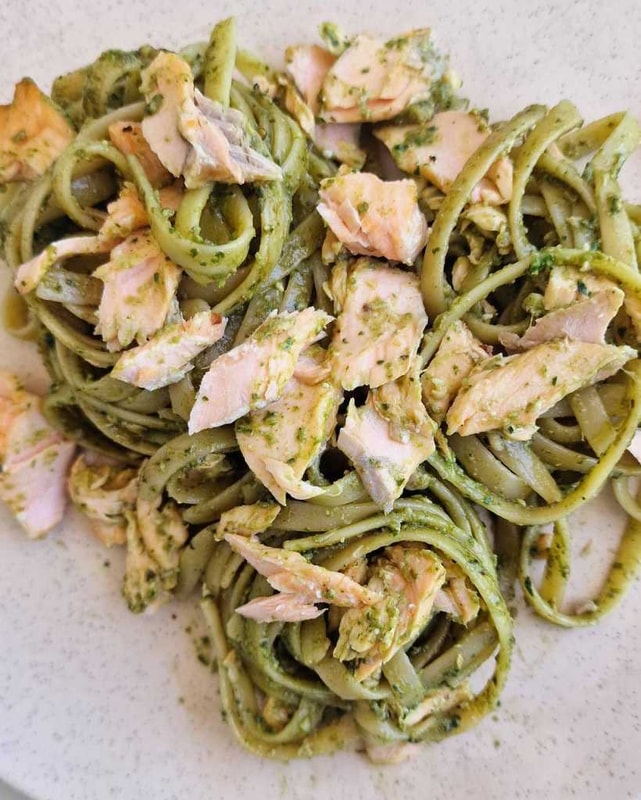
Is pesto pasta best served hot or cold?
Salmon pesto pasta is traditionally served hot, as the heat helps to bring out the flavors of the salmon and the pesto sauce. Serving it hot allows the salmon to stay tender and the pesto to coat the pasta more evenly. The warmth enhances the aromatic qualities of the dish and creates a comforting meal.
However, some people may enjoy leftover salmon pesto pasta chilled or at room temperature. If you have any leftovers, you can refrigerate them and enjoy them as a cold pasta salad the next day. The flavors will still be delicious, albeit slightly different from when it’s served hot.
Ultimately, it depends on personal preference. If you prefer the flavors of the salmon and pesto to meld together while enjoying it warm, serving it hot is the way to go. If you enjoy the contrast of cool pasta and the flavors of the pesto and salmon as a cold dish, you can try serving it chilled.
What goes with pesto pasta?
Salmon pesto pasta pairs well with a variety of complementary dishes. Here are a few options that go well with salmon pesto pasta:
- Green Salad: Serve a fresh green salad on the side, such as a mixed green salad with cherry tomatoes, cucumbers, and a light vinaigrette. The crispness of the salad provides a refreshing contrast to the pasta. For example, here is a good salad idea: Green Goddess Salad.
- Garlic Bread: Enjoy a slice of garlic bread or a garlic knot alongside the salmon pesto pasta. The garlic-infused bread complements the flavors of the pasta and adds a delightful crunch. Here is the recipe for the Crispy Garlic Bread.
- Steamed Broccoli: Serve steamed broccoli on the side for added nutrition and color. The vibrant green broccoli florets provide a nice contrast and a healthy addition to the meal.
- Caprese Salad: A classic Caprese salad with sliced tomatoes, fresh mozzarella cheese, and basil leaves drizzled with balsamic glaze is a light and flavorful accompaniment to the pasta. As an excellent option you can choose Citrus Caprese Salad which adds even more freshness to the pasta.
These are just a few suggestions, but feel free to experiment and add your own favorite sides based on your taste preferences. Remember to consider the balance of flavors and textures to create a well-rounded meal.
A Note from Chef Ana
This Salmon Pesto Pasta is a dish I absolutely love preparing for my private dinner clients in The Woodlands and the greater Houston area. My philosophy has always been about elevating classic American comfort food with proper technique and the freshest local Texas ingredients. I source as much as I can from local farms and markets in the Houston area, because fresh, seasonal produce always makes a noticeable difference.
Whether you are hosting a dinner party, planning a celebration, or simply want a wholesome meal for your family, I would love to bring this recipe — and many more — to your table. Feel free to reach out to learn more about my personal and private chef services in The Woodlands, Spring, Tomball, Conroe, and the greater Houston area.
Substitutions & Variations
As a personal chef who specializes in dietary accommodations, I always encourage my clients to adapt recipes to their individual needs. Here are some practical variations for this recipe:
- Gluten-Free: Use your favorite certified gluten-free pasta — rice-based, chickpea, or lentil pasta all work beautifully and hold up well with pesto sauce.
- Dairy-Free: Replace the Parmesan cheese in the pesto with nutritional yeast or a plant-based Parmesan alternative. The basil, pine nuts, garlic, and olive oil carry so much flavor that you will not miss the cheese.
- Vegetarian/Vegan: For a plant-based version, substitute the protein with extra-firm tofu, tempeh, or hearty portobello mushrooms. Marinate them the same way for maximum flavor absorption.
Frequently Asked Questions
Can I use store-bought pesto instead of homemade?
Yes! A good quality store-bought pesto works perfectly when you are short on time. Look for brands with simple, recognizable ingredients — basil, olive oil, Parmesan, pine nuts, and garlic. Homemade pesto has a brighter, fresher flavor, but store-bought is a perfectly acceptable shortcut.
What type of pasta works best with pesto and salmon?
Short pasta shapes like fusilli, penne, or farfalle are ideal because the pesto clings to all the ridges and curves. Linguine and spaghetti also work well if you prefer long pasta. The key is to toss the pasta with the pesto while still warm so the sauce coats every strand.
Can I make the pesto ahead of time?
Absolutely. Homemade pesto stores well in the refrigerator for up to 5 days in an airtight jar with a thin layer of olive oil on top to prevent browning. You can also freeze pesto in ice cube trays for up to 3 months — just thaw and toss with warm pasta when ready.
How do I prevent the pesto from turning brown?
Pesto browns due to oxidation of the basil. To keep it vibrant green, blanch the basil leaves in boiling water for 5 seconds, then immediately transfer to an ice bath before blending. When storing, always cover the surface with a thin layer of olive oil to block air exposure.
You Might Also Like
Love This Recipe?
Discover more delicious recipes and consider our personal chef services for fresh, healthy meals prepared in your home.