Simple Sushi Sandwich
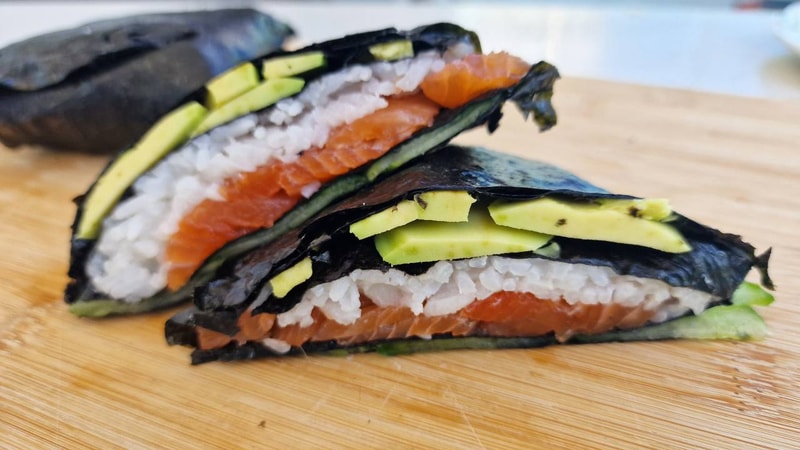
Sushi Sandwich is a delicious and easy-to-make meal option, which brings together the flavors of sushi in a convenient and handheld format!
Ingredients
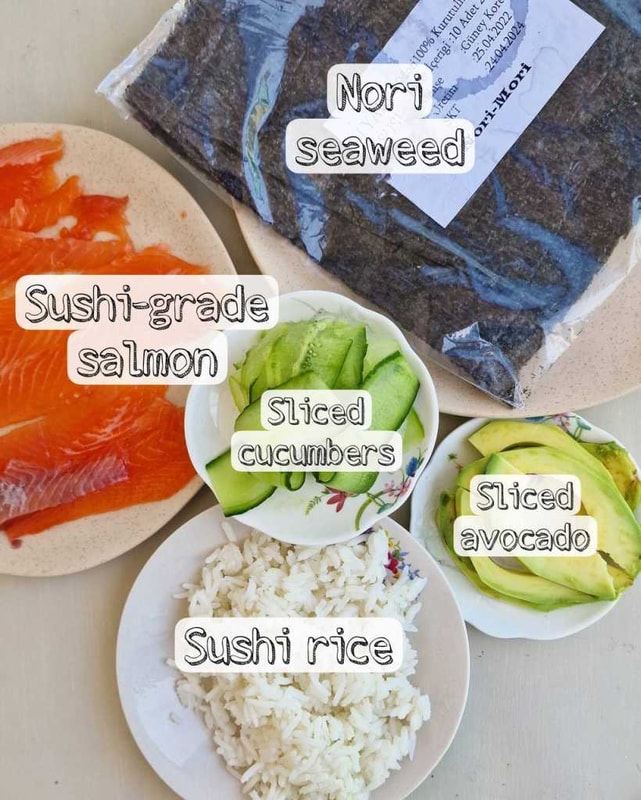
- 2 sheets of nori (seaweed)
- 1/2 cup sushi rice, cooked and seasoned with rice vinegar, sugar, and salt
- 2 oz. sushi-grade salmon, sliced
- 1 cucumber, sliced
- 1/4 avocado, sliced
- Soy sauce and wasabi, for dipping (optional)
Instructions
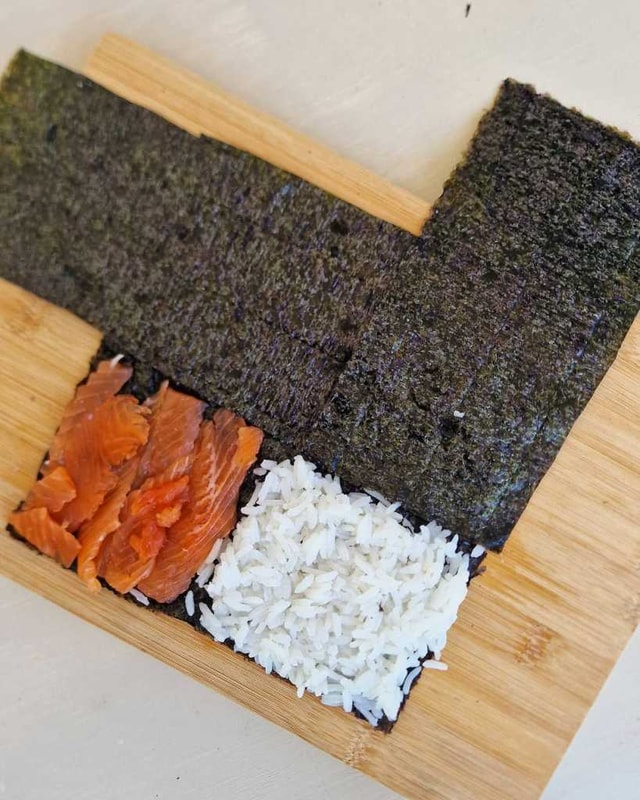
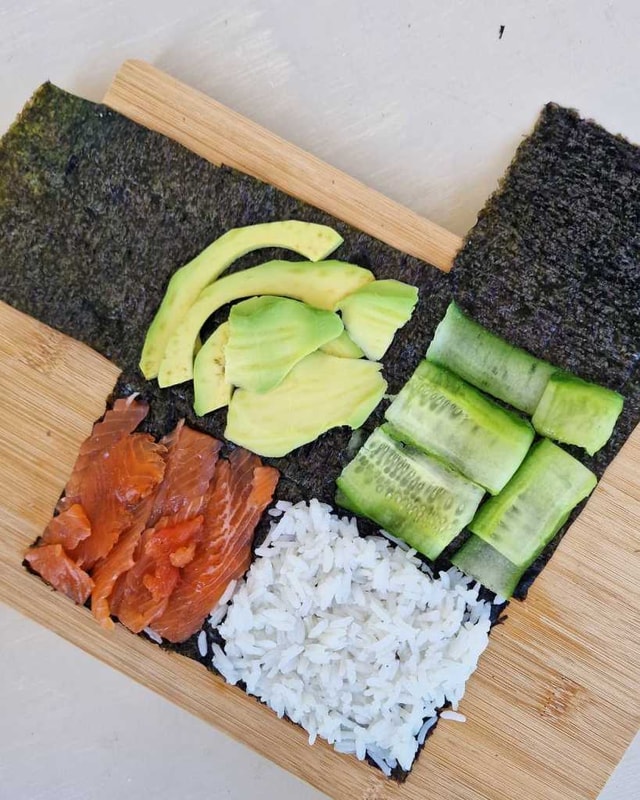
Lay one nori sheet on a clean, dry surface. Cut the 2nd nori sheet in half and place them as it's shown in the pic.
Spread the cooked sushi rice evenly on the bottom 1/4 part of the nori sheet, leaving a small border at the bottom.
Place the sliced salmon or your preferred sushi-grade fish on top of the rice, covering the next 1/4 part of the nori sheet.
Layer the thinly sliced avocado on the third part of the nori sheet, right above the fish.
Add the sliced cucumber, covering the final 1/4 part of the nori sheet.
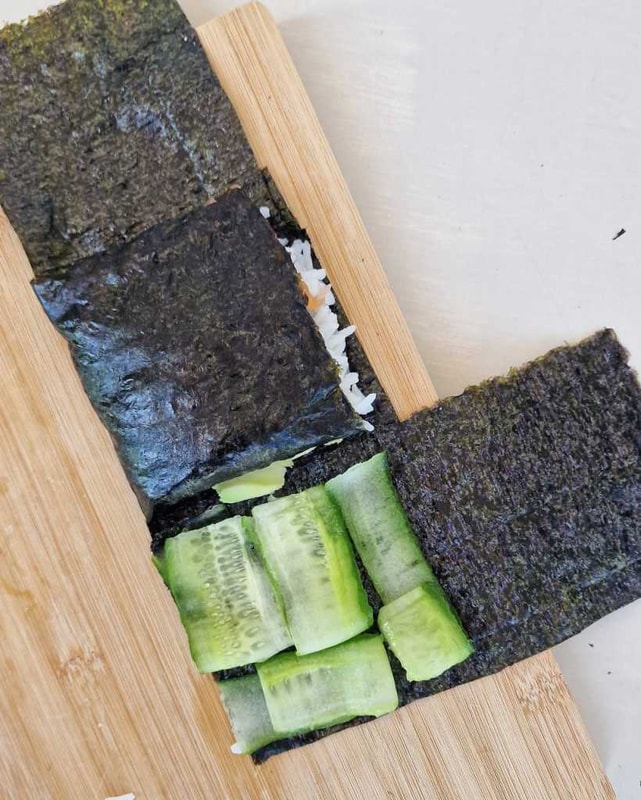
Starting from the bottom (rice-covered part), carefully wrap the nori sheet as it's shown. Once the nori is fully wraped, use a little water on the border to seal the sushi sandwich.
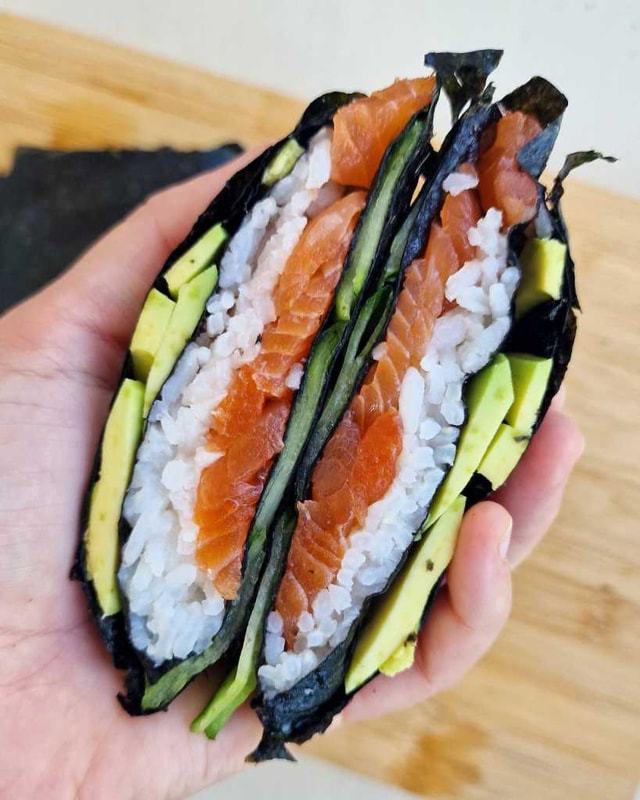
Use a sharp knife to cut the sushi sandwich into half. Serve your simple sushi sandwich with soy sauce and wasabi on the side for dipping. Enjoy!
Chef's Tips & Notes
Recipe Details
Recipe Tags
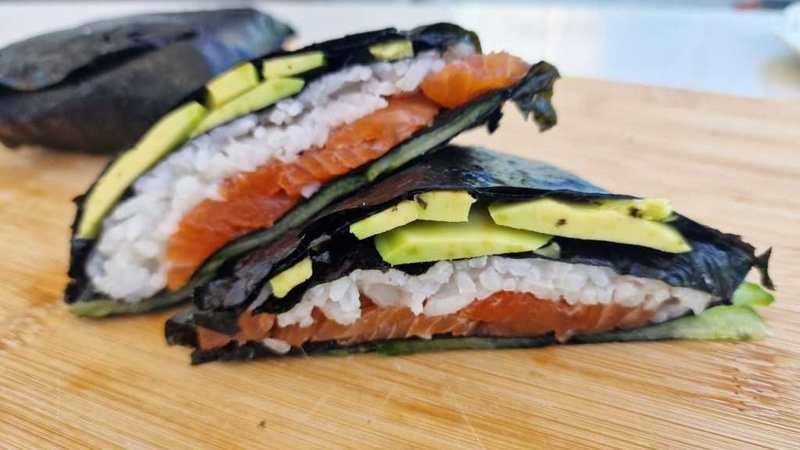
Simple Sushi Sandwich is a delicious and easy-to-make meal option, which brings together the flavors of sushi in a convenient and handheld format!
What is this Sushi Sandwich made of?
The Sushi Sandwich is made of the following ingredients, each adding its unique flavor and texture:
- Nori (Seaweed): Nori is a type of edible seaweed used as the outer wrapping for sushi. It provides a slightly salty and briny taste and adds a crisp texture to the sandwich.
- Sushi Rice: Sushi rice is a short-grain Japanese rice seasoned with rice vinegar, sugar, and salt. It has a sticky and slightly sweet taste, helping to bind the ingredients together and providing the authentic sushi flavor.
- Sliced Salmon or Sushi-Grade Fish: Sliced salmon or any other sushi-grade fish of choice serves as the main protein component. The fish adds a delicate and fresh flavor, and it’s often a highlight of sushi sandwiches.
- Cucumber: Thinly sliced cucumber brings a refreshing and crunchy element to the sandwich. It complements the fish and adds a contrasting texture.
- Avocado: Sliced avocado contributes a creamy and buttery taste to the sushi sandwich. It also enhances the overall richness and creaminess of the filling.
- Soy Sauce and Wasabi: Soy sauce is a classic dipping sauce for sushi, providing a salty and umami flavor. Wasabi, a pungent green paste made from Japanese horseradish, is often served alongside soy sauce for adding a spicy kick to the sushi sandwich.
The combination of these ingredients results in a delightful Sushi Sandwich, offering a fusion of traditional sushi flavors in a convenient and handheld format. It’s a versatile dish that allows for creative variations, making it a popular choice among sushi lovers. Enjoy the delicious blend of textures and tastes in this simple yet satisfying sushi-inspired creation.
Is sushi sandwich healthy?
The healthiness of a sushi sandwich depends on its ingredients and preparation method. When made with nutritious components and consumed in moderation, a sushi sandwich can be a relatively healthy option. Let’s break it down:
- Nori (Seaweed): Nori is low in calories and a good source of iodine, vitamins, and minerals. It provides essential nutrients that support thyroid function and overall health.
- Sushi Rice: While sushi rice is a source of carbohydrates, it is also low in fat and contains some protein. However, the rice is often seasoned with sugar and rice vinegar, which can add some extra calories and carbohydrates.
- Sliced Salmon or Sushi-Grade Fish: Fish like salmon is an excellent source of high-quality protein and omega-3 fatty acids, which are beneficial for heart health and brain function.
- Cucumber: Cucumber is low in calories and provides hydration due to its high water content. It also contains vitamins and minerals, making it a healthy addition to the sushi sandwich.
- Avocado: Avocado is rich in healthy monounsaturated fats, fiber, vitamins, and minerals. While it is nutritious, it is also calorie-dense, so portion control is important.
- Soy Sauce and Wasabi: Soy sauce is high in sodium, so consuming it in moderation is crucial to avoid excessive salt intake. Wasabi is low in calories and can have potential health benefits due to its antibacterial properties.
The overall healthiness of a sushi sandwich also depends on portion size and additional condiments or ingredients used. If made with whole, fresh, and unprocessed ingredients, and with attention to portion control, a sushi sandwich can be a balanced meal containing protein, healthy fats, and some carbohydrates.
How do you wrap a nori sandwich?
Place one sheet of nori on a clean and dry surface. Cut the second nori sheet in half and position them as shown in the picture. Evenly spread the cooked sushi rice over the bottom 1/4 part of the nori sheet, leaving a small border at the bottom. Next, place the sliced salmon or your preferred sushi-grade fish on top of the rice, covering the next 1/4 part of the nori sheet.
 Layer the thinly sliced avocado on the third part of the nori sheet, directly above the fish. Add the sliced cucumber, covering the final 1/4 part of the nori sheet.
 Starting from the bottom (rice-covered part), carefully wrap the nori sheet as demonstrated in the picture. Once the nori is fully rolled, use a little water along the edge to seal the sushi sandwich.
 Use a sharp knife to cut the sushi sandwich in half. Serve your simple sushi sandwich with soy sauce and wasabi on the side for dipping. Enjoy
A Note from Chef Ana
This Simple Sushi Sandwich is a dish I absolutely love preparing for my private dinner clients in The Woodlands and the greater Houston area. Japanese cuisine is all about precision, balance, and respecting the integrity of each ingredient — values that resonate deeply with my culinary philosophy. I love bringing these refined techniques to my clients’ tables using the best ingredients I can source here in Texas.
Whether you are hosting a dinner party, planning a celebration, or simply want a wholesome meal for your family, I would love to bring this recipe — and many more — to your table. Feel free to reach out to learn more about my personal and private chef services in The Woodlands, Spring, Tomball, Conroe, and the greater Houston area.
Substitutions & Variations
As a personal chef who specializes in dietary accommodations, I always encourage my clients to adapt recipes to their individual needs. Here are some practical variations for this recipe:
- Gluten-Free: This recipe is naturally gluten-free. Just use tamari or coconut aminos instead of regular soy sauce for dipping, and confirm your rice vinegar has no added gluten.
- Dairy-Free: This recipe is naturally dairy-free — there is no butter, cheese, or cream involved.
- Vegetarian/Vegan: Replace the salmon with thinly sliced mango, marinated tofu, or roasted sweet potato strips. The avocado and cucumber already provide wonderful texture and flavor for a plant-based sushi sandwich.
- Soy-Free/Low-Sodium: Replace soy sauce with coconut aminos for a soy-free and lower-sodium alternative that still delivers a rich umami flavor.
Frequently Asked Questions
Where can I find sushi-grade salmon?
Look for sushi-grade or sashimi-grade salmon at your local fish market, Japanese grocery store, or the seafood counter of well-stocked supermarkets. Ask the fishmonger specifically for fish that is safe to eat raw. Many stores also carry frozen sushi-grade salmon, which has been flash-frozen to kill parasites and is perfectly safe for raw consumption.
Can I make sushi sandwiches ahead of time?
Sushi sandwiches are best enjoyed within 30 minutes of assembly. The nori stays crisp and the rice stays soft at that point. If you need to prep ahead, prepare all the fillings in advance and store them separately in the refrigerator. Assemble just before serving for the best texture.
Why does my nori tear when I wrap it?
Nori tears when it is too dry or when you try to fold it too tightly. Make sure to work quickly before the nori absorbs moisture from the rice and becomes too soft. If it is too brittle, you can lightly dampen it with wet fingers. Using a second half-sheet of nori as reinforcement (as this recipe suggests) also helps prevent tearing.
Can I use regular salmon instead of sushi-grade?
For safety, only sushi-grade or sashimi-grade salmon should be eaten raw. Regular salmon has not been handled or frozen to the standards required for raw consumption. If you cannot find sushi-grade fish, consider using smoked salmon instead — it is pre-cured and safe to eat without cooking, and it tastes wonderful in a sushi sandwich.
You Might Also Like
Love This Recipe?
Discover more delicious recipes and consider our personal chef services for fresh, healthy meals prepared in your home.