Best Seafood Pizza
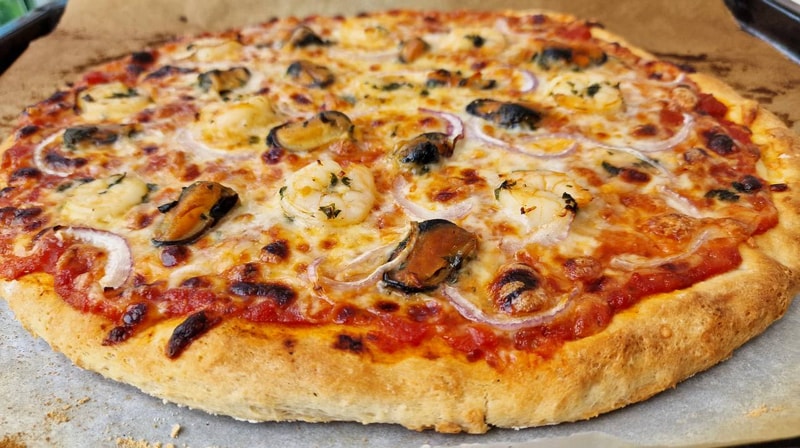
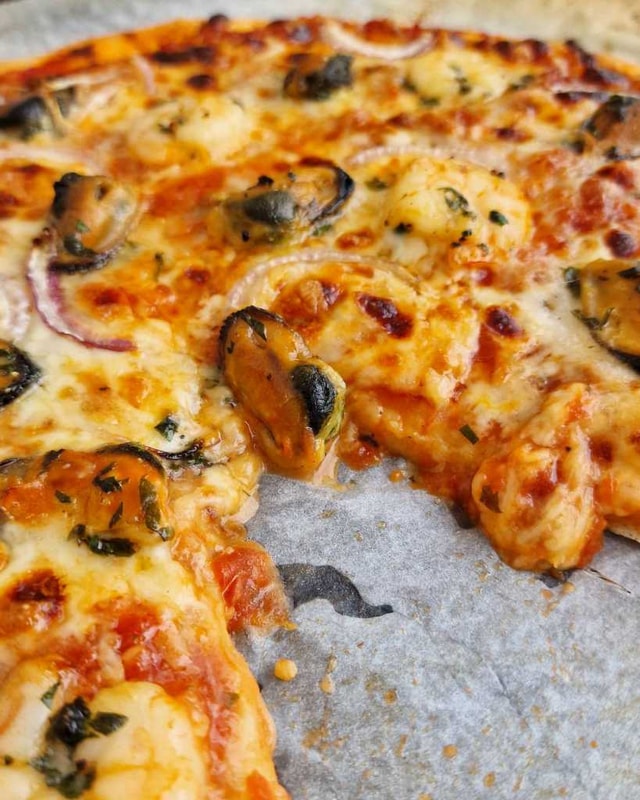
Seafood pizza is a delectable dish that combines the flavors of the ocean with the classic concept of pizza!
Ingredients
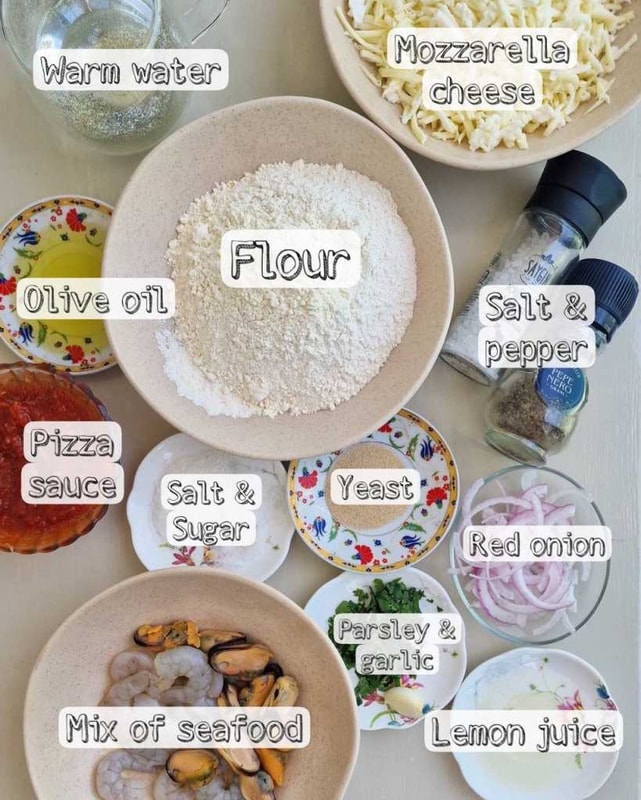
- 2 ¼ cups all-purpose flour
- 1 tsp instant yeast
- 1 tsp sugar
- 1 tsp salt
- 1 cup warm water
- 2 tbsp olive oil
- 1 cup shredded mozzarella cheese
- 1/4 lb. shrimp, peeled and deveined
- 1/4 lb. mixed seafood (such as mussels, or scallops), cleaned and chopped
- 1/4 small red onion, thinly sliced
- 1/2 tbsp chopped fresh parsley
- 1/2 tbsp lemon juice
- 1 garlic clove, minced
- 1 tbsp olive oil
- Salt and pepper to taste
- 7 oz. crushed tomatoes
- 1 clove garlic, minced
- 1 tsp olive oil
- 1/4 tsp dried oregano
- 1/2 tsp salt
Instructions
Prepare the pizza dough by combining flour, yeast, sugar, and salt in a large bowl. Gradually add warm water and olive oil while stirring, until the dough comes together.
Transfer the dough to a lightly floured surface and knead for about 5 minutes until it becomes smooth and elastic. Form the dough into a ball and place it in a greased bowl. Cover the bowl with a clean kitchen towel and let the dough rise in a warm area for about 1 to 2 hours, or until it doubles in size.
Preheat your oven to 475°F (245°C).
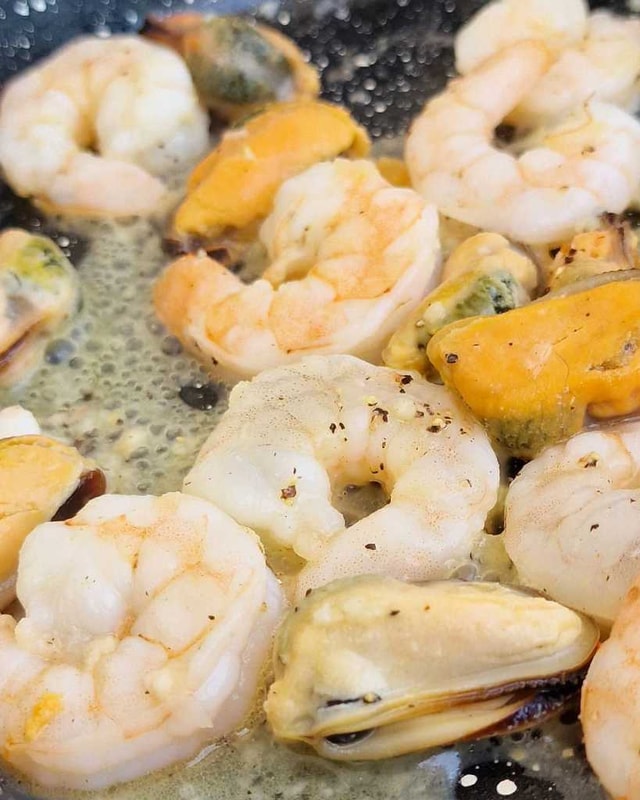
In a skillet, heat 1 tablespoon of olive oil over medium heat. Add the shrimp and mixed seafood to the skillet, along with the minced garlic. Sauté for a few minutes until the seafood is cooked through. Remove from heat and toss with lemon juice, chopped parsley, salt, and pepper.
On a lightly floured surface, roll out the pizza dough into your desired thickness and shape. Transfer the rolled-out dough to a pizza stone or a baking sheet lined with parchment paper.
Prepare the sauce. In a small bowl, mix together crushed tomatoes, olive oil garlic, oregano, salt, and pepper. Spread the sauce evenly over the pizza dough, leaving a small border around the edges.
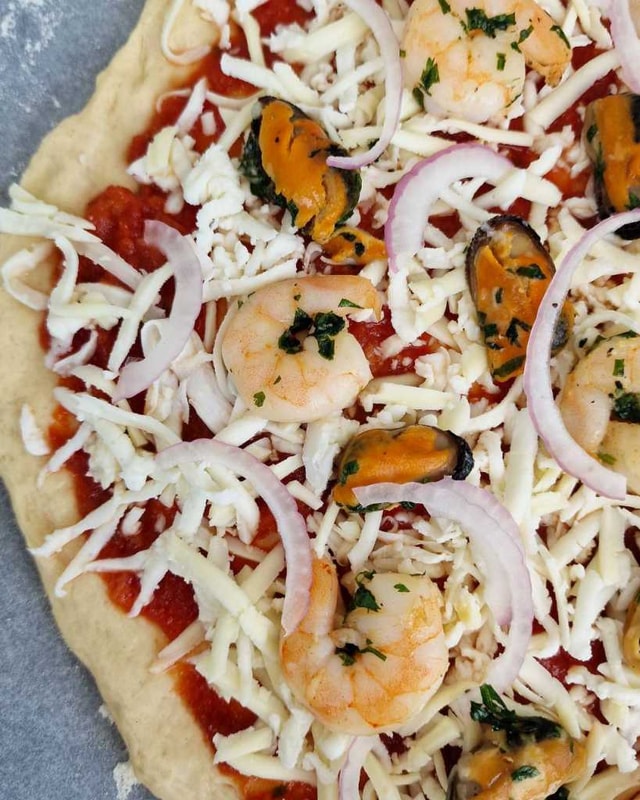
Spread the sauce evenly over the pizza dough, leaving a small border around the edges. Sprinkle shredded mozzarella cheese over the sauce. Distribute the cooked seafood mixture evenly on top of the cheese. Scatter sliced red onions over the seafood. Drizzle some olive oil over the pizza.
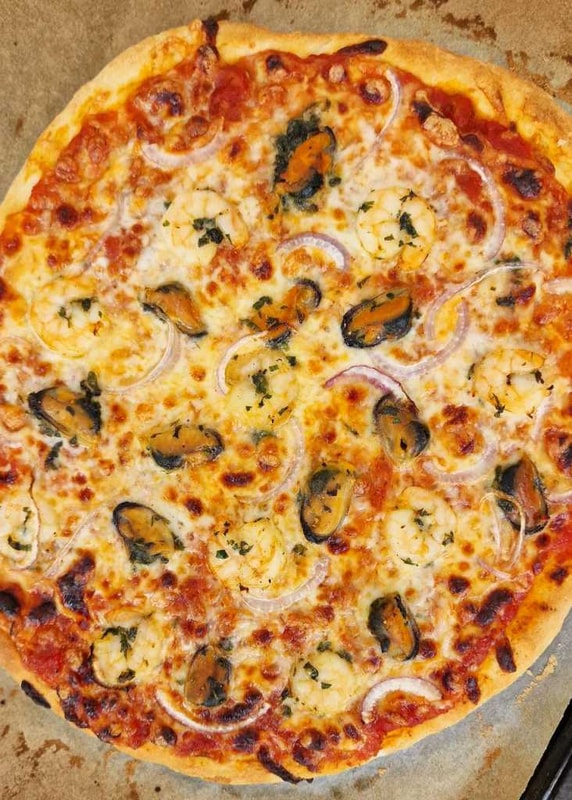
Bake for 10-12 minutes, or until the crust is golden brown and the cheese is melted and bubbly. Remove the pizza from the oven and let it cool for a few minutes. Slice the pizza into wedges and serve hot. Enjoy your delicious homemade seafood pizza!
Chef's Tips & Notes
Recipe Details
Recipe Tags
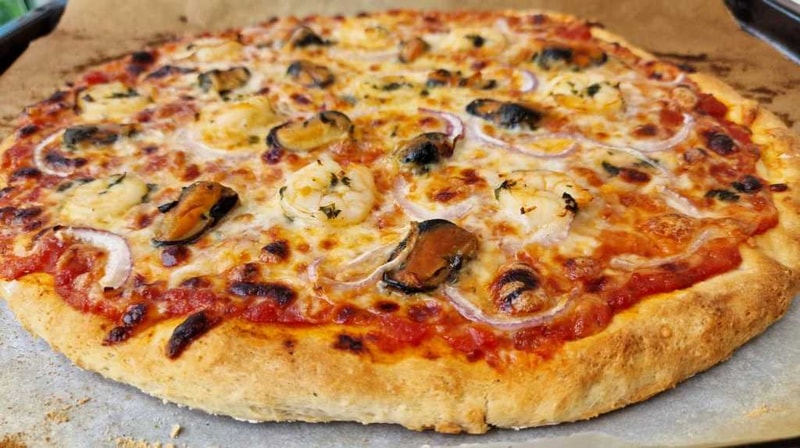
Seafood pizza is a delectable dish that combines the flavors of the ocean with the classic concept of pizza. I am fond of pizza as well as seafood! Let’s combine those together to get a delicious and savory dish. Picture a golden, crispy crust topped with bubbling mozzarella, tender shrimp, and briny mussels — all kissed by a garlicky tomato sauce and a squeeze of fresh lemon. The aroma alone, with its warm bread and caramelized seafood notes, will have everyone gathering around the table.
Where did seafood pizza originate?
The specific origin of seafood pizza is not clear, as it has evolved over time with culinary influences from various regions. However, the concept of using seafood as a pizza topping can be traced back to Mediterranean and coastal areas where seafood is abundant and forms an integral part of the local cuisine.
One possibility is that seafood pizzas emerged from the culinary traditions of Italy, particularly in coastal regions like Naples, where pizza originated. Italian cuisine heavily incorporates seafood in many dishes, and it’s likely that the idea of seafood toppings on pizza developed as a natural extension of these coastal culinary practices.
Another influence could come from Mediterranean countries such as Spain, where seafood-based dishes like paella or seafood stews are popular. The concept of seafood as a pizza topping might have been influenced by these Mediterranean flavors.
Additionally, as pizza has gained international popularity and undergone creative variations, chefs and pizzaiolos from different parts of the world have experimented with a wide range of toppings, including seafood. This has contributed to the diversification and evolution of seafood pizza.
In summary, while the exact origin of seafood pizza is unclear, it likely developed from a combination of Italian coastal culinary traditions, Mediterranean influences, and the creative experimentation of pizza makers around the world.
What is a seafood pizza called?
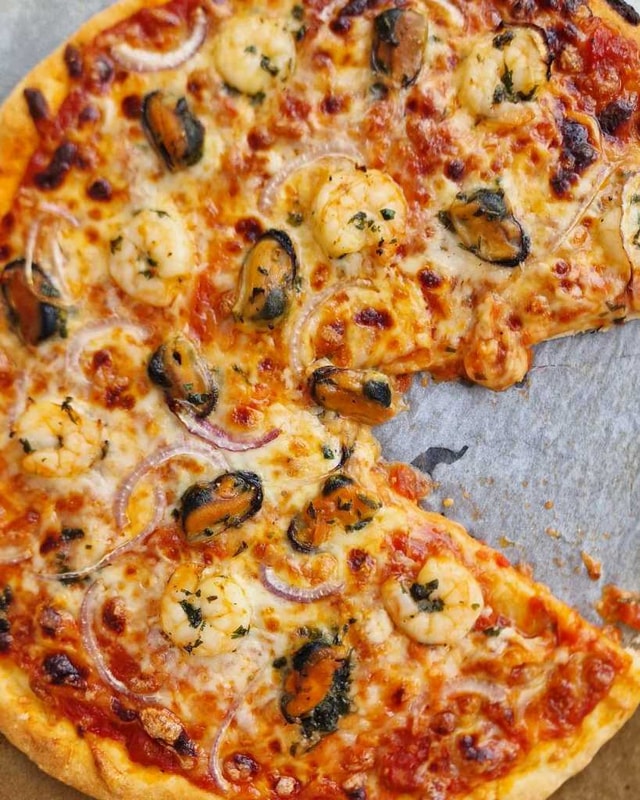
A seafood pizza is typically referred to as “seafood pizza” or “pizza di mare” in Italian. These terms are commonly used to describe pizzas that feature various types of seafood as toppings. However, it’s important to note that different regions or restaurants may have their own specific names for seafood pizzas, depending on their culinary traditions or creative variations. So, while “seafood pizza” is a widely recognized term, it’s possible to come across different names for this type of pizza depending on the context or the specific establishment.
Do Italians put shrimp on pizza?
Traditionally, shrimp is not a common topping found on traditional Italian pizzas. Classic Italian pizzas typically feature ingredients such as tomatoes, mozzarella cheese, basil, mushrooms, olives, prosciutto, and other cured meats. Seafood toppings commonly found in Italian cuisine include anchovies, clams, mussels, and squid, but shrimp is not as commonly used.
However, it’s important to note that modern pizza variations and creative adaptations have become popular worldwide, and this includes the addition of shrimp as a topping. In some regions or pizzerias, you may find seafood pizzas that include shrimp along with other seafood toppings. These variations may be influenced by international tastes and preferences or local culinary innovations.
So while it may not be a traditional Italian topping, you can certainly find pizzas with shrimp as a topping in certain places, especially those that offer a more diverse range of pizza options. Pizza toppings can vary based on personal preferences and regional influences, allowing for a wide variety of creative and delicious combinations.
What are the benefits of seafood pizza?
Seafood pizza can offer several health benefits due to its nutritious ingredients. Here are some potential health benefits:
- Rich in Omega-3 Fatty Acids: Many types of seafood used as toppings in seafood pizza, such as shrimp, salmon, or sardines, are excellent sources of omega-3 fatty acids. Omega-3s have been linked to numerous health benefits, including reduced inflammation, improved heart health, and enhanced brain function.
- High in Protein: Seafood is a great source of lean protein, which is essential for muscle growth, tissue repair, and overall body function. Protein helps keep you feeling full and satisfied, which may help control appetite and prevent overeating.
- Nutrient-Dense Toppings: Seafood, along with other ingredients used as toppings on seafood pizza, such as tomatoes, onions, garlic, and herbs, are nutrient-dense. They provide an array of vitamins, minerals, and antioxidants that support overall health and well-being.
- Low in Saturated Fat: Seafood is generally low in saturated fat compared to other meat options commonly used as pizza toppings. Consuming less saturated fat can contribute to heart health and help maintain healthy cholesterol levels.
- High in Essential Minerals: Seafood is also an excellent source of minerals including: iodine, which is critical to thyroid gland functioning and metabolism; iron is crucial for red cell formation; zinc, for wound healing and sexual function; and niacin -vital for a healthy skin and metabolism.
It’s worth noting that the overall healthiness of seafood pizza can depend on other factors such as portion size, preparation methods, and additional ingredients used. For a healthier pizza, consider using whole wheat crust, opting for lighter cheese options, and adding an abundance of vegetable toppings. Additionally, practicing portion control and balancing your overall diet with other nutritious foods is important for maintaining a healthy lifestyle.
What is Seafood Pizza made of?
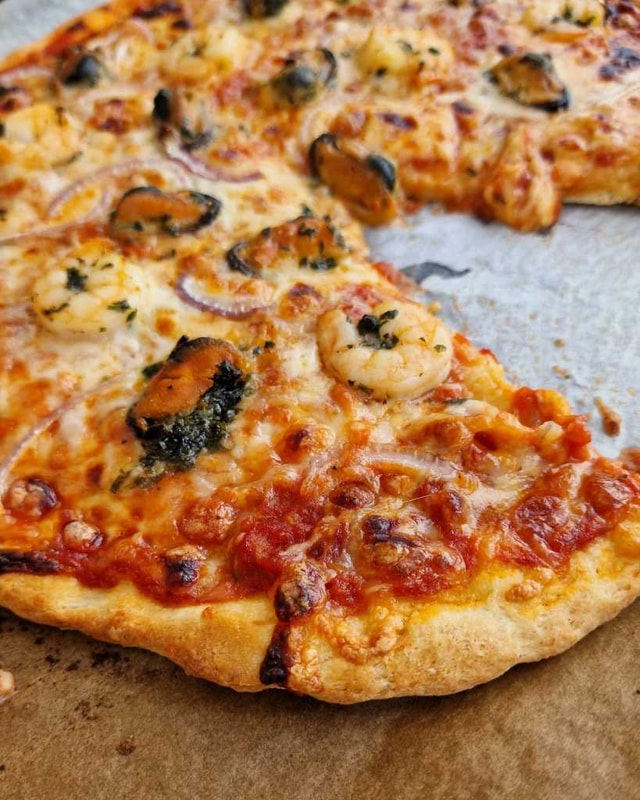
Seafood pizza is made with a variety of seafood toppings combined with other ingredients that are commonly found on pizzas. While the specific ingredients can vary depending on personal preference and regional variations, here are some common components of seafood pizza:
- Pizza Dough: The base of the pizza is typically made with pizza dough, which is a combination of flour, yeast, water, salt, and sometimes olive oil. The dough is rolled out into a thin crust that serves as the foundation for the toppings.
- Tomato Sauce: A tomato-based sauce, such as pizza sauce or marinara sauce, is often spread over the pizza dough. This sauce provides a tangy and flavorful base for the toppings.
- Cheese: Shredded mozzarella cheese is used on seafood pizzas. It melts beautifully and adds a creamy, savory element to the pizza. Some variations may also include other cheeses like Parmesan or goat cheese.
- Seafood Toppings: Seafood toppings can include a variety of options depending on personal preference and availability. Common choices include shrimp, clams, mussels, calamari, scallops, or a combination of these. The seafood can be cooked or pre-cooked, depending on the recipe.
- Herbs and Seasonings: Fresh or dried herbs and seasonings like garlic, basil, parsley, red pepper flakes, and oregano are often added to enhance the flavors of the pizza.
- Olive Oil: A drizzle of olive oil on top of the pizza adds richness and flavor. It can be added before or after baking the pizza.
How to make Seafood Pizza?
Prepare the pizza dough by combining flour, yeast, sugar, and salt in a large bowl. Gradually add warm water and olive oil while stirring, until the dough comes together. Transfer the dough to a lightly floured surface and knead for about 5 minutes until it becomes smooth and elastic. Form the dough into a ball and place it in a greased bowl.
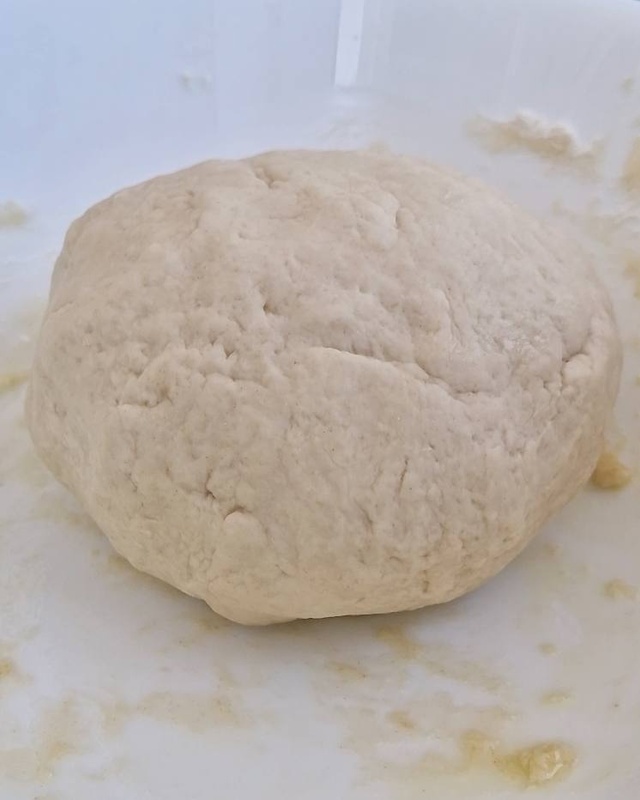 Cover the bowl with a clean kitchen towel and let the dough rise in a warm area for about 1 to 2 hours, or until it doubles in size. Preheat your oven to the temperature for your pizza, around 475°F or 245°C. In a skillet, heat 1 tablespoon of olive oil over medium heat. Add the shrimp and mixed seafood to the skillet, along with the minced garlic. Sauté for a few minutes until the seafood is cooked through. Remove from heat and toss with lemon juice, chopped parsley, salt, and pepper.
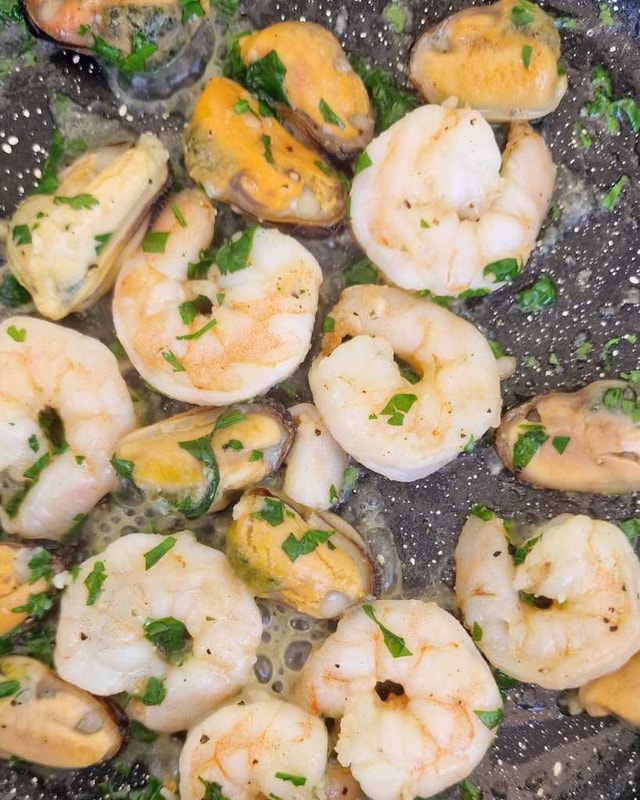 On a lightly floured surface, roll out the pizza dough into your desired thickness and shape. Transfer the rolled-out dough to a pizza stone or a baking sheet lined with parchment paper. Spread tomato sauce evenly over the pizza dough, leaving a small border around the edges. Sprinkle shredded mozzarella cheese over the sauce.
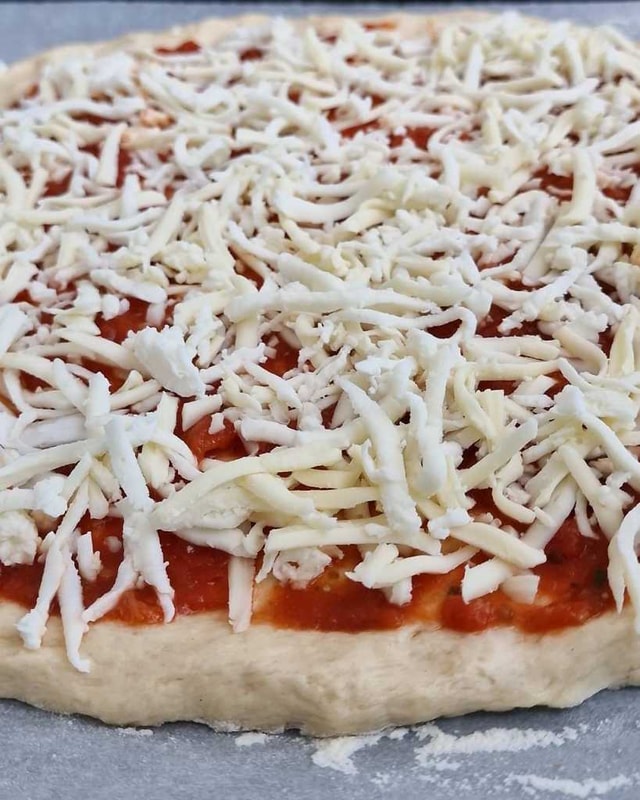 Distribute the cooked seafood mixture evenly on top of the cheese. Scatter sliced red onions over the seafood. Drizzle the remaining tablespoon of olive oil over the pizza.
 Bake the pizza in the preheated oven for about 10–12 minutes, or until the crust is golden brown and the cheese has melted and bubbled. Once cooked, remove the pizza from the oven and let it cool for a few minutes. Slice the pizza into wedges and serve hot!
What goes well with seafood pizza?
There are several side dishes and accompaniments that pair well with seafood pizza. Here are some options to consider:
- Green Salad: A fresh green salad with a light vinaigrette or lemon-based dressing can provide a refreshing contrast to the rich flavors of the seafood pizza. Here is the Green Goddess Salad recipe that complements Seafood Pizza perfectly.
- Garlic Bread: Garlic bread is a classic side dish that complements the flavors of seafood pizza. You can prepare it by spreading a mixture of butter, minced garlic, and herbs on sliced bread and toasting it until golden and aromatic. Here is the ultimate recipe for Crispy Garlic Bread.
- Grilled or baked vegetables: Grilled vegetables like zucchini, bell peppers, eggplant, or asparagus make a fantastic side dish. Here are some good recipes:
- Seafood Salad: To keep the seafood theme going, you can prepare a light seafood salad as a side dish. Here are some seafood salad options:
- White Wine or Sparkling Water: For a beverage pairing, a chilled glass of white wine, such as Sauvignon Blanc or Pinot Grigio, can complement the flavors of the seafood pizza. Alternatively, if you prefer a non-alcoholic option, sparkling water with a slice of lemon or lime can provide a refreshing contrast.
These are just a few suggestions, and you can always choose sides based on your personal preferences and dietary restrictions. The goal is to have complementary flavors and textures that enhance the overall dining experience.
A Note from Chef Ana
This Best Seafood Pizza is a dish I absolutely love preparing for my private dinner clients in The Woodlands and the greater Houston area. Having trained in European kitchens, Italian cuisine holds a special place in my culinary journey. The simplicity of Italian cooking demands the highest quality ingredients, which is why I always seek out the best local Texas produce and artisan products.
Whether you are hosting a dinner party, planning a celebration, or simply want a wholesome meal for your family, I would love to bring this recipe — and many more — to your table. Feel free to reach out to learn more about my personal and private chef services in The Woodlands, Spring, Tomball, Conroe, and the greater Houston area.
Substitutions & Variations
As a personal chef who specializes in dietary accommodations, I always encourage my clients to adapt recipes to their individual needs. Here are some practical variations for this recipe:
- Gluten-Free: Use a certified gluten-free pizza dough or a cauliflower crust. Both hold up well under the toppings, though cauliflower crust should be pre-baked until firm before adding sauce and toppings.
- Dairy-Free: Replace the mozzarella with a quality plant-based shredded cheese that melts well, or skip the cheese entirely and drizzle the finished pizza with a garlic-infused olive oil and fresh arugula.
- Different Seafood: Swap the shrimp and mussels for scallops, calamari rings, or canned tuna. Smoked salmon added after baking (not during) creates an elegant cold-topped variation.
Frequently Asked Questions
Can I use store-bought pizza dough instead of homemade?
Absolutely. A quality store-bought pizza dough from your grocery store’s bakery section or a refrigerated dough works perfectly well. Let it come to room temperature for about 30 minutes before rolling it out — cold dough is difficult to stretch and tends to spring back.
Can I use frozen seafood?
Yes, frozen seafood works well as long as you thaw it completely and pat it very dry with paper towels before cooking. Any excess water from improperly thawed seafood will make the pizza crust soggy and prevent the toppings from browning properly.
Do I need a pizza stone to make this at home?
A pizza stone gives the best results by absorbing moisture and creating an incredibly crispy bottom crust, but it is not required. A heavy-duty baking sheet or an inverted cast-iron skillet preheated in the oven works as an excellent substitute.
You Might Also Like
Love This Recipe?
Discover more delicious recipes and consider our personal chef services for fresh, healthy meals prepared in your home.