Blue Cheese Pasta with Walnuts
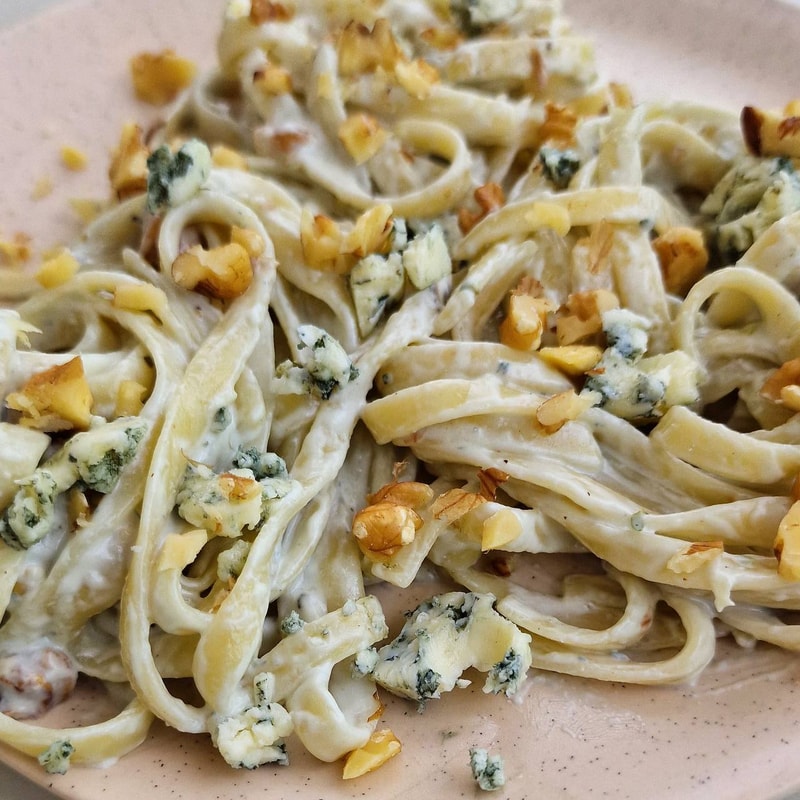
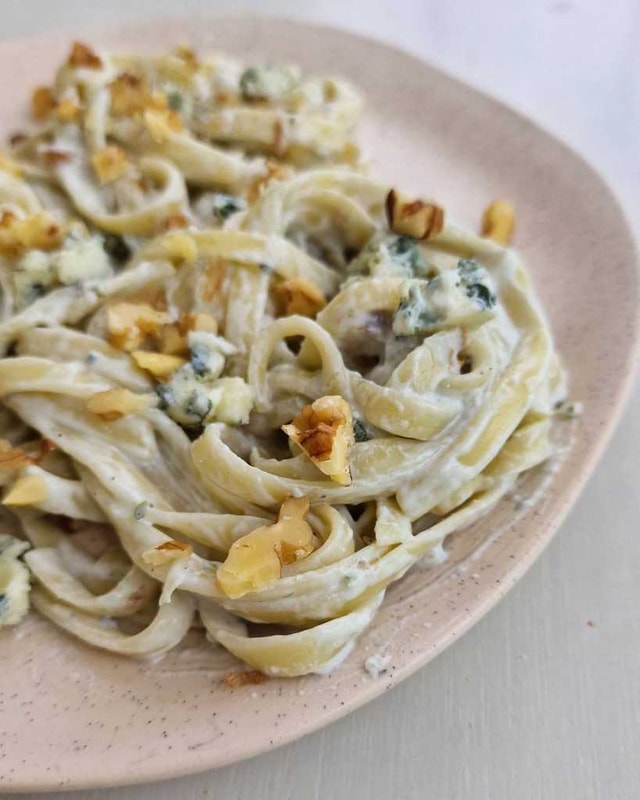
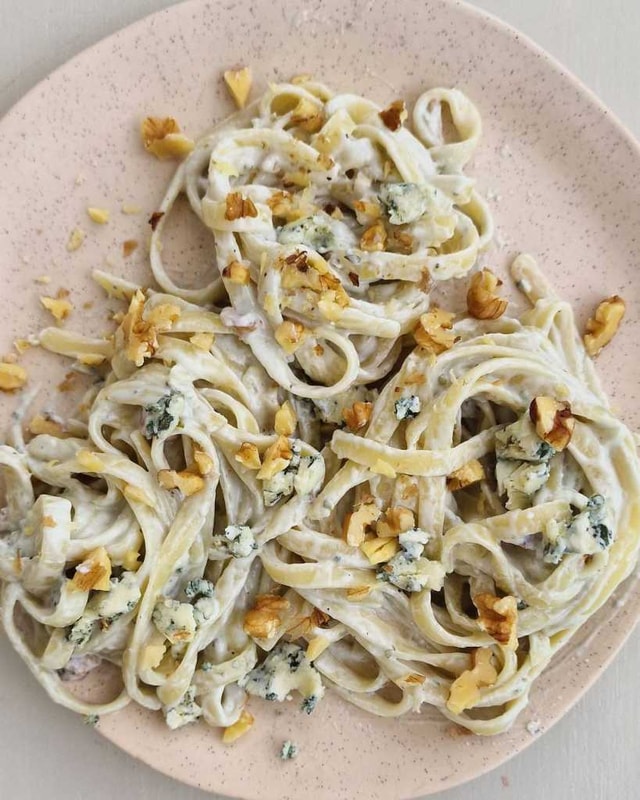
This Blue Cheese Pasta with Walnuts has creamy, tangy, and nutty flavors. It can be a delicious option for those who are fond of blue cheese and savory flavors.
Ingredients
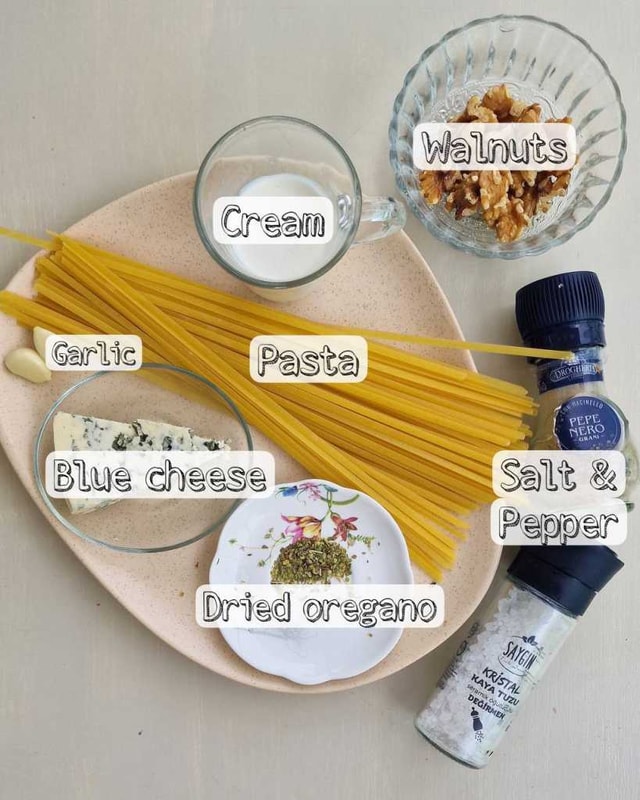
- 4 oz. pasta
- 2 oz. blue cheese, crumbled (adjust amount based on desired intensity)
- 1/4 cup walnuts, chopped
- 1/4 cup heavy cream
- 1 1 clove garlic, minced
- 1/2 tsp butter or oil
- 1/2 tsp dried oregano
- Salt and pepper to taste
Instructions
Cook the pasta till al dente, drain and set aside.
In a pan, heat a small amount of oil or butter over medium heat. Add the minced garlic and sauté it until it becomes fragrant, taking care not to burn it.
Pour in the cream and bring it to a gentle simmer.
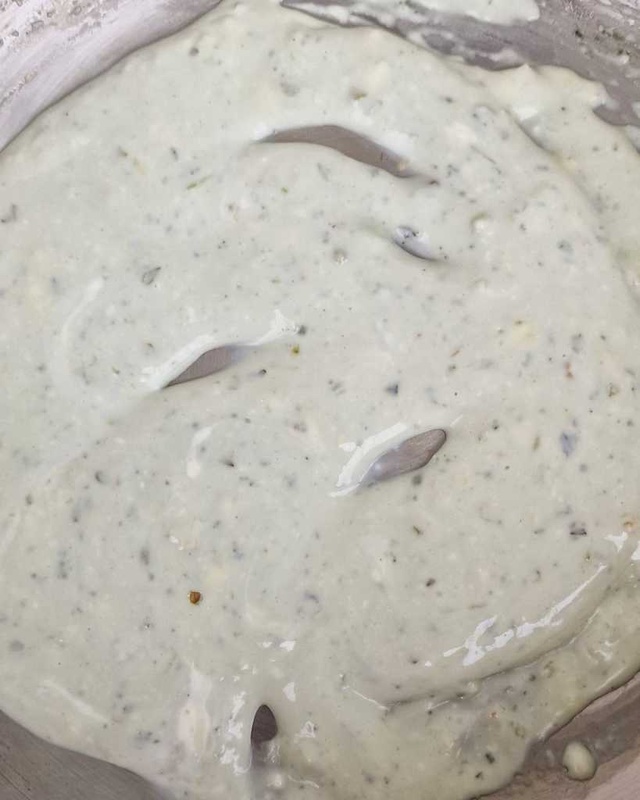
Add the blue cheese to the sauce and stir until it melts and forms a creamy sauce. Remove the sauce from the heat and let it cool slightly. The sauce will thicken as it cools.
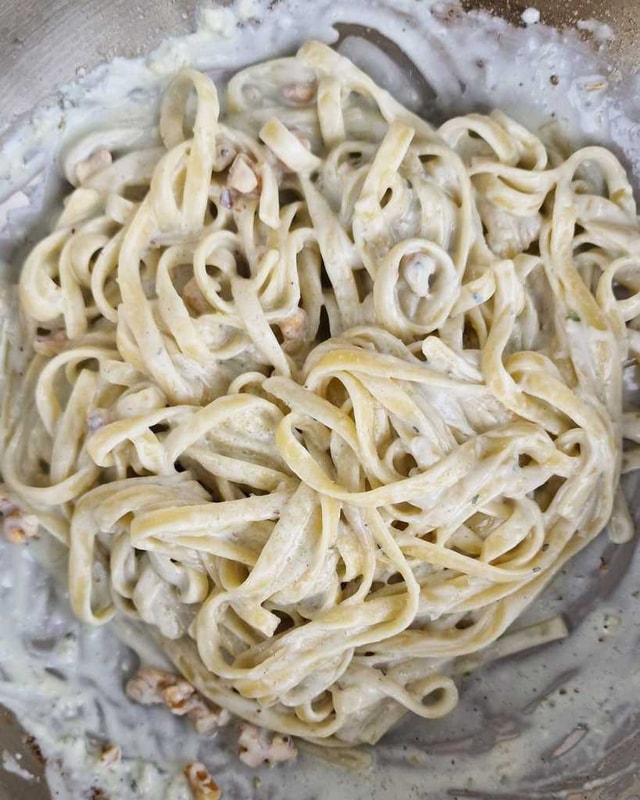
Add the cooked pasta to the sauce and toss gently to coat the pasta evenly. Stir in the walnuts, reserving some for garnish, and season with salt, pepper, and dried oregano.
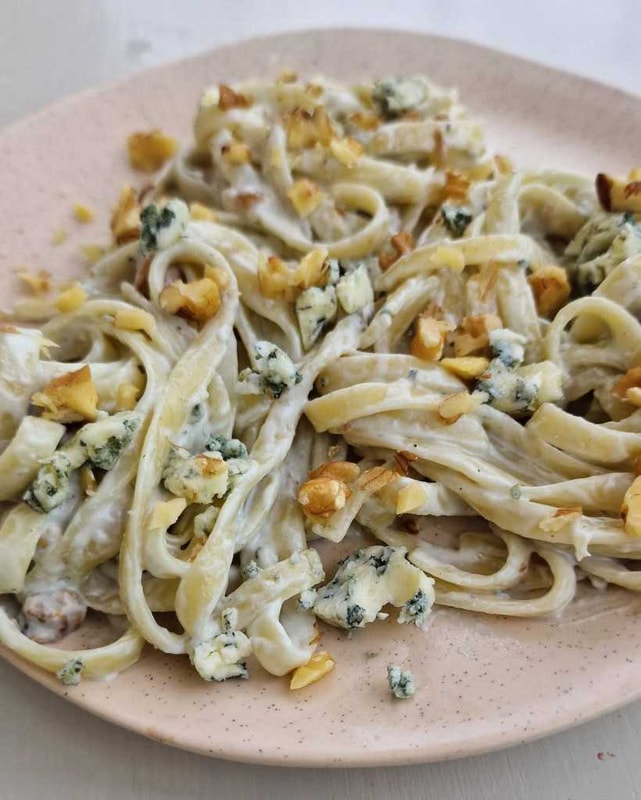
Serve the Blue Cheese Pasta with Walnuts in individual bowls or plates, garnishing with a sprinkle of crumbled blue cheese and toasted walnuts.
Chef's Tips & Notes
Recipe Details
Recipe Tags
This Blue Cheese Pasta with Walnuts has creamy, tangy, and nutty flavors. It can be a delicious option for those who are fond of blue cheese and savory flavors. Picture silky strands of pasta coated in a velvety blue cheese sauce, finished with a scattering of toasted walnuts that add the perfect crunch. This is the kind of comforting, flavor-packed dish that comes together in under 30 minutes and tastes like it came straight from a European bistro.
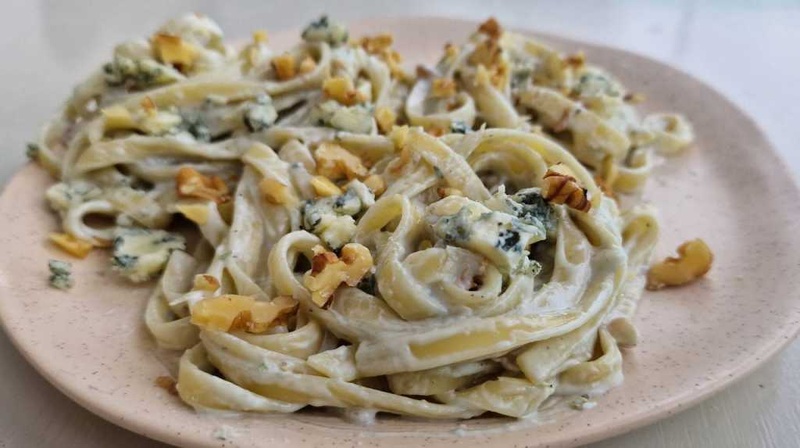
What is Blue Cheese Pasta made of?
Here’s a list of ingredients for Blue Cheese Pasta with Walnuts:
- Pasta: Pasta refers to a variety of dough-based noodles made from wheat flour or other grains. Choose your preferred type of pasta, such as spaghetti or linguini.
- Blue Cheese: Blue cheese is a type of cheese characterized by its distinctive blue or green veins running through it. It has a strong, tangy, and slightly salty flavor. Crumbling or melting blue cheese into the pasta sauce adds a rich and creamy element that complements the other flavors.
- Walnuts: Walnuts are edible nuts with a mildly sweet and nutty flavor. They have a satisfying crunch and provide a pleasant contrast to the soft pasta. Lightly toasting the walnuts intensifies their flavor and adds a delightful aroma to the dish.
- Cream: Cream is used to create a creamy sauce that coats the pasta. Heavy cream is perfect for this recipe. The creaminess adds richness to the dish and helps balance the strong flavor of the blue cheese.
- Garlic: Garlic is a pungent bulb widely used in cooking for its savory flavor. Mincing the garlic finely and sautéing it adds a subtle garlicky taste that enhances the overall savory profile of the dish.
- Seasonings: Seasonings like salt, pepper, and oregano are added to enhance the flavors of the pasta. Salt helps to bring out the flavors in the other ingredients, while pepper adds a bit of heat and complexity. Herbs such as thyme or oregano can be used to introduce additional aromatic notes and freshness.
Which blue cheese goes well with pasta?
When it comes to choosing a blue cheese for the Blue Cheese Pasta with Walnuts, there are several varieties that can work well depending on your taste preferences. Here are a few popular blue cheeses often used in pasta dishes:
- Roquefort: Roquefort is a French blue cheese known for its strong and tangy flavor. It has a creamy texture and distinct blue veins running through it. Its robust taste pairs well with the richness of the pasta and adds a bold flavor profile.
- Gorgonzola: Gorgonzola is an Italian blue cheese that comes in two varieties: dolce (sweet and milder) and piccante (stronger and sharper). Both types offer a creamy texture with a characteristic blue mold. Dolce Gorgonzola is often preferred for its smoother and more delicate flavor, while piccante Gorgonzola adds a bolder punch.
- Stilton: Stilton is an English blue cheese with a crumbly yet creamy texture. It has a rich and complex flavor, ranging from mild to strong. Stilton’s savory and slightly salty taste can complement the other ingredients in the pasta dish.
- Danish Blue: Danish Blue is a milder blue cheese with a smooth and creamy texture. It has a slightly salty and tangy taste, making it a good option for those who prefer a more balanced and less intense blue cheese flavor.
The choice of blue cheese ultimately depends on your personal preference for the level of tanginess and intensity you desire in the dish. Experimenting with different types of blue cheese can help you find the one that suits your taste best.
Does blue cheese melt well?
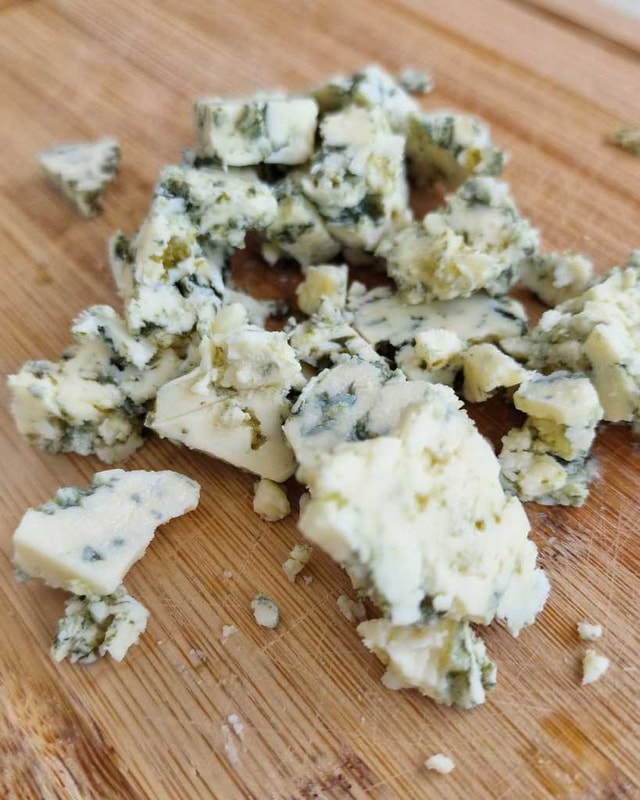
Blue cheese does not melt in the same way as some other cheeses, such as mozzarella or cheddar. Blue cheese has a crumbly texture due to the presence of mold veins throughout. When heated, blue cheese softens and becomes creamy, but it doesn’t fully melt into a smooth, gooey consistency like some other cheeses.
When using blue cheese in dishes like Blue Cheese Pasta with Walnuts, it can be crumbled or melted into the sauce to incorporate its flavor and create a creamy texture. The heat will soften the cheese and allow it to blend with the other ingredients, but it will still retain some of its characteristic crumbly texture.
The distinct flavor and unique texture of blue cheese make it a desirable addition to various dishes, including pasta, salads, and sauces.
Why is blue cheese so healthy?
Blue cheese offers several potential health benefits due to its nutrient content and the presence of certain compounds. Here are some reasons why blue cheese can be considered a healthy addition to your diet:
- Nutrient-Rich: Blue cheese is a good source of essential nutrients such as calcium, protein, vitamin K2, and vitamin B12. These nutrients are important for bone health, blood clotting, and the production of red blood cells.
- Probiotics: Blue cheese, like other fermented dairy products, contains live bacteria known as probiotics. Probiotics promote a healthy gut microbiome, which can support digestion, boost the immune system, and enhance overall gut health.
- Antioxidants: Blue cheese contains various antioxidants, including phenolic compounds, which have been associated with reducing inflammation and protecting against oxidative stress, potentially lowering the risk of chronic diseases.
- Vitamin D: Some blue cheeses are made from milk exposed to ultraviolet (UV) light during the aging process, which can increase their vitamin D content. Vitamin D is essential for bone health, immune function, and overall well-being.
- Conjugated Linoleic Acid (CLA): Blue cheese is a natural source of conjugated linoleic acid (CLA), a type of fatty acid with potential health benefits, including anti-inflammatory and anti-cancer properties. However, the CLA content may vary depending on the cheese and the production process.
It’s important to note that blue cheese is relatively high in saturated fat and sodium, so it should be consumed in moderation, especially if you have specific dietary restrictions or health concerns.
How to make blue cheese sauce for pasta?
In a pan, heat a small amount of oil or butter over medium heat. Add the minced garlic and sauté it until it becomes fragrant, taking care not to burn it. Pour in the cream and bring it to a gentle simmer. Add the blue cheese to the sauce and stir until it melts and forms a creamy sauce. Remove the sauce from the heat and let it cool slightly. The sauce will thicken as it cools.
 Add the cooked pasta to the sauce and toss gently to coat the pasta evenly. Stir in the walnuts, reserving some for garnish, and season with salt, pepper, and any additional herbs or seasonings.
 Serve the Blue Cheese Pasta with Walnuts in individual bowls or plates, garnishing with a sprinkle of crumbled blue cheese and toasted walnuts.
 If you like easy pasta recipes, check out these recipes:
A Note from Chef Ana
This Blue Cheese Pasta with Walnuts is a dish I absolutely love preparing for my private dinner clients in The Woodlands and the greater Houston area. Having trained in European kitchens, Italian cuisine holds a special place in my culinary journey. The simplicity of Italian cooking demands the highest quality ingredients, which is why I always seek out the best local Texas produce and artisan products.
Whether you are hosting a dinner party, planning a celebration, or simply want a wholesome meal for your family, I would love to bring this recipe — and many more — to your table. Feel free to reach out to learn more about my personal and private chef services in The Woodlands, Spring, Tomball, Conroe, and the greater Houston area.
Substitutions & Variations
As a personal chef who specializes in dietary accommodations, I always encourage my clients to adapt recipes to their individual needs. Here are some practical variations for this recipe:
- Gluten-Free: Use your favorite certified gluten-free pasta, such as brown rice pasta or chickpea pasta. Both hold up well in the creamy sauce without becoming mushy.
- Dairy-Free: Replace the blue cheese and cream with a cashew-based cream sauce blended with nutritional yeast and a splash of lemon juice for tanginess. It will not taste identical, but it creates a rich, savory sauce.
- Nut-Free: Swap the walnuts for toasted pumpkin seeds or sunflower seeds. They provide a similar crunch and earthy flavor without the tree nut allergen.
Frequently Asked Questions
What pasta shape works best with blue cheese sauce?
Short, ridged pasta shapes like penne, rigatoni, or fusilli are ideal because they trap the creamy sauce in their grooves and hollows. Long pasta like fettuccine or tagliatelle also works beautifully if you prefer a more elegant presentation — the flat noodles coat evenly with the sauce.
The sauce is too thick. How do I thin it out?
Add a splash of reserved pasta cooking water, one tablespoon at a time, while stirring over low heat. The starchy pasta water helps thin the sauce while keeping it silky and emulsified. Avoid adding plain water or extra cream, as they can dilute the flavor.
Can I use a milder cheese if blue cheese is too strong?
If you find blue cheese too intense, start with a milder variety like Gorgonzola Dolce, which has a creamier, gentler flavor. You can also reduce the amount of blue cheese and supplement with a bit of cream cheese or mascarpone to keep the sauce rich without the bold tang.
You Might Also Like
Love This Recipe?
Discover more delicious recipes and consider our personal chef services for fresh, healthy meals prepared in your home.