Healthy Coconut Flour Waffles
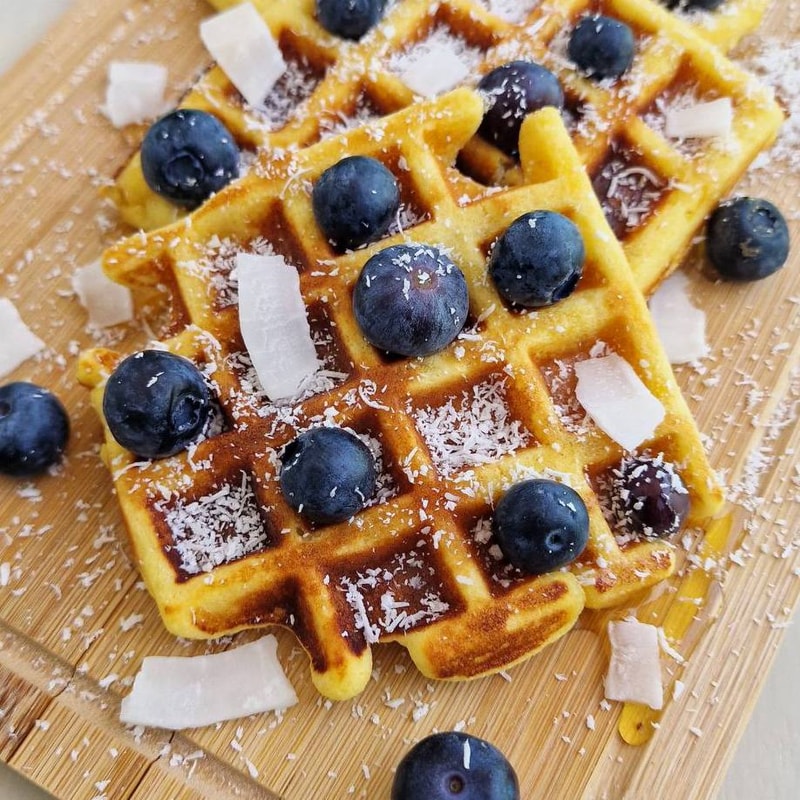
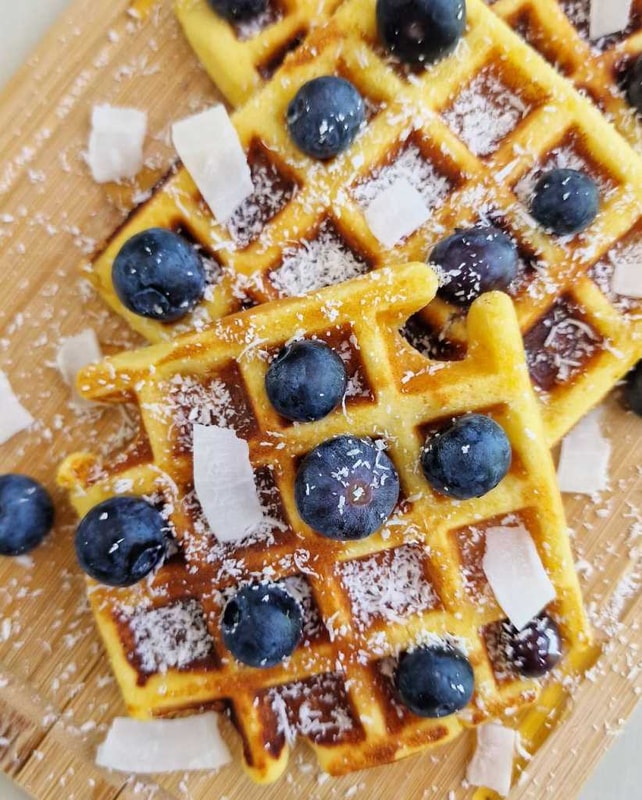
These healthier coconut flour waffles are low in carbohydrates and gluten-free! They have a fluffy texture due to the coconut flour and delicious vanilla flavor twist.
Ingredients
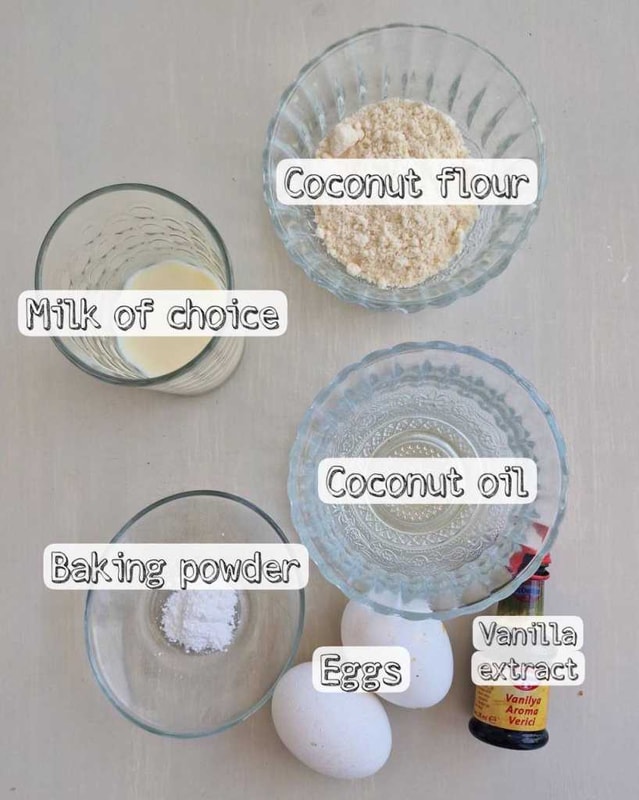
- 2 large eggs
- 1/4 cup unsweetened almond milk or milk of choice
- 2 tbsp melted coconut oil (or other cooking oil)
- 1/3 cup coconut flour
- 1/2 tsp baking powder
- 1/2 tsp vanilla extract
Instructions
Preheat your waffle iron according to the manufacturer's instructions.
In a mixing bowl, whisk together the eggs, almond milk or milk of choice, vanilla extract and melted coconut oil until well combined.
In a separate bowl, combine the coconut flour and baking powder.
Gradually add the dry mixture to the wet mixture, stirring until a smooth batter forms. Let the batter sit for a few minutes to allow the coconut flour to absorb the liquid and thicken.
Lightly grease the waffle iron with cooking spray or a small amount of coconut oil. Spoon the batter onto the preheated waffle iron, spreading it evenly. Close the lid and cook according to the waffle iron's instructions, usually for about 3-5 minutes, or until the waffles are golden brown and cooked through.
Carefully remove the waffles from the iron and serve them warm with your fav toppings!
Chef's Tips & Notes
Recipe Details
Recipe Tags
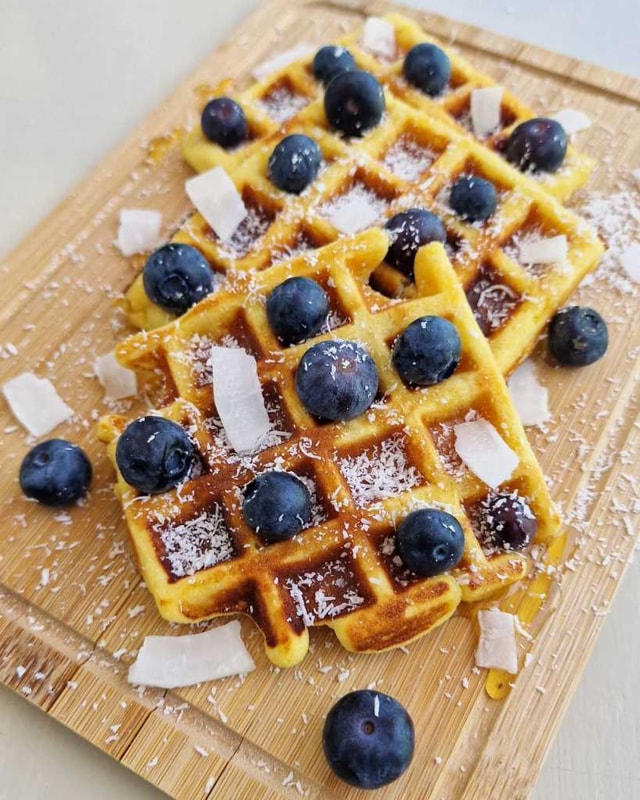
These healthy coconut flour waffles are low in carbohydrates and gluten-free! Golden and crisp on the outside with a pillowy, tender interior, they carry a subtle coconut sweetness and a warm vanilla aroma that fills the kitchen. They have a fluffy texture due to the coconut flour and delicious vanilla flavor twist.
What are coconut flour waffles made of?
Here’s a description of each ingredient used in the modified recipe for healthy coconut flour waffles:
- Large eggs: Eggs are a common ingredient in waffles, providing structure and moisture. They also contribute to the protein content of the waffles.
- Unsweetened almond milk or milk of choice: Almond milk is a non-dairy alternative often used in healthier recipes. It adds moisture to the waffle batter and helps create a tender texture. You can use any milk of your choice, including dairy milk or other plant-based milks.
- Melted coconut oil: Coconut oil adds richness and moisture to the waffles. It also brings a subtle coconut flavor to complement the coconut flour. By the way, coconut oil has been shown to have the potential to protect against not only heart disease but a wide variety of chronic health problems including diabetes and cancer as well as a means to prevent and even treat infectious diseases.
- Coconut flour: Coconut flour is made from dried coconut meat that has been ground into a fine powder. It is a high-fiber and gluten-free alternative to traditional flours. Coconut flour helps give the waffles a fluffy texture and adds a hint of coconut flavor.
- Baking powder: Baking powder is a leavening agent that helps the waffles rise and become light and fluffy.
- Vanilla extract: Vanilla extract is aromatic and adds a delightful flavor to the waffles. It pairs well with the coconut and adds a touch of sweetness.
Is coconut flour a good flour substitute?
Coconut flour can be a good flour substitute in certain recipes, especially for those following a gluten-free or grain-free diet. Here are some points to consider regarding coconut flour as a flour substitute:
- Gluten-Free: Coconut flour is naturally gluten-free, making it a suitable option for individuals with celiac disease or gluten sensitivity. It can be used in place of wheat flour in gluten-free recipes.
- High in Fiber: Coconut flour is exceptionally high in fiber, which can have benefits for digestion and overall health. However, the high fiber content can also affect the texture and moisture balance in baked goods, so it’s important to follow specific recipes that are designed for coconut flour.
- Absorbency: Coconut flour has high absorbency compared to other flours. It absorbs liquid quickly and requires more liquid in recipes. It’s common to see recipes that call for more eggs or additional liquids when using coconut flour.
- Unique Texture: Coconut flour has a unique texture, which can result in denser and moister baked goods compared to those made with traditional flours. It may not be an exact one-to-one substitute in all recipes, so it’s often best to use recipes specifically developed for coconut flour.
When using coconut flour as a flour substitute, it’s essential to find recipes, such as in this coconut flour waffles recipe, that are specifically developed for coconut flour or follow reliable guidelines to ensure the best results. Experimentation may be required to achieve the desired texture and flavor in baked goods.
How does coconut flour affect baking?
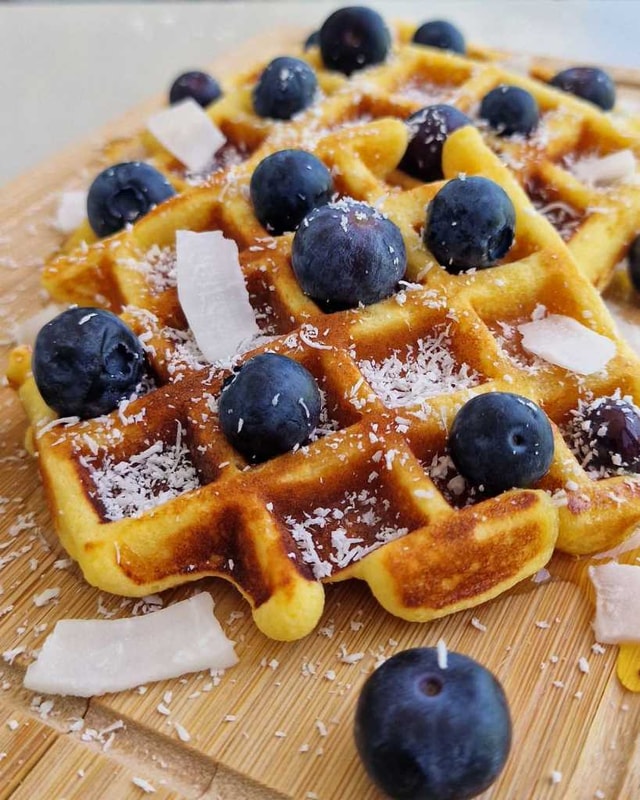
Coconut flour has unique properties that can significantly affect baking. Here’s how coconut flour can impact various aspects of baking coconut flour waffles:
- Absorbency: Coconut flour is highly absorbent due to its high fiber content. It absorbs a significant amount of liquid compared to other flours. When using coconut flour in recipes, it’s important to increase the liquid content to achieve the right consistency of the batter or dough. Additional moisture helps prevent the final baked goods from being too dry or crumbly.
- Texture: Coconut flour can result in a different texture compared to traditional flours. It tends to absorb moisture and create a denser, more compact texture in baked goods. This can be advantageous in certain recipes, such as dense cakes or brownies, where a moist and fudgy texture is desired. However, in recipes that require a light and fluffy texture, coconut flour may need to be combined with other flours or leavening agents to achieve the desired result.
- Binding: Coconut flour lacks gluten, the protein responsible for providing structure and elasticity in baked goods. Therefore, coconut flour may not provide the same binding properties as gluten-containing flours. This can make it challenging to achieve a cohesive texture in certain recipes. To improve binding, it’s common to use additional eggs or other binding agents, such as xanthan gum, when using coconut flour.
When baking with coconut flour, it’s crucial to follow recipes specifically developed for coconut flour or adapt existing recipes by making appropriate adjustments in moisture, binding agents, and leavening agents. Experimentation and trial and error may be necessary to achieve the desired texture and flavor when using coconut flour in baking.
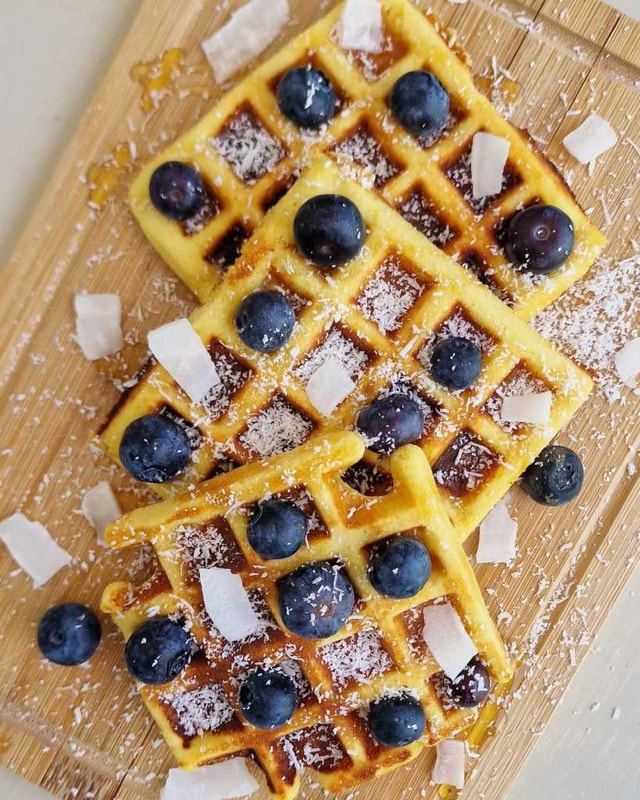
How to make coconut flour waffles?
Preheat your waffle iron according to the manufacturer’s instructions.
In a mixing bowl, whisk together the eggs, almond milk or milk of choice, vanilla extract and melted coconut oil until well combined. In a separate bowl, combine the coconut flour and baking powder.
Gradually add the dry mixture to the wet mixture, stirring until a smooth batter forms. Let the batter sit for a few minutes to allow the coconut flour to absorb the liquid and thicken.
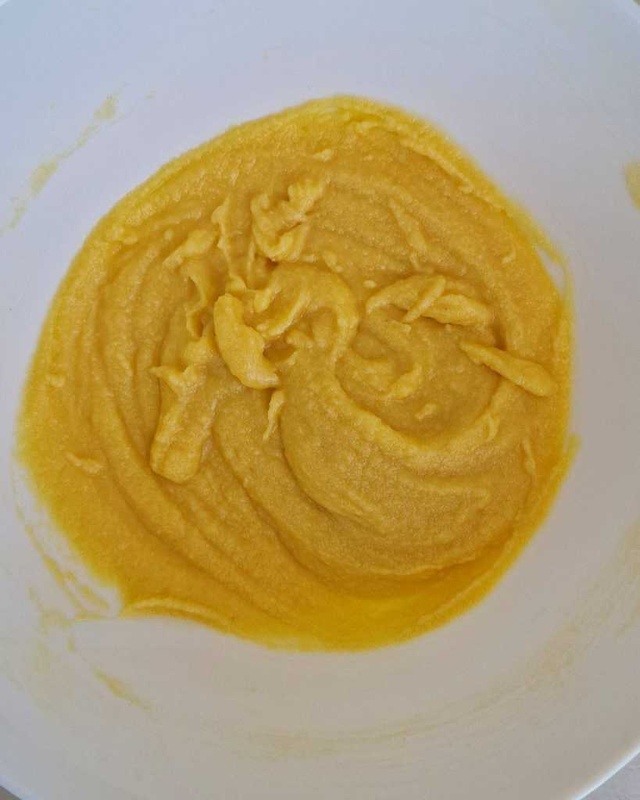 Lightly grease the waffle iron with cooking spray or a small amount of coconut oil. Spoon the batter onto the preheated waffle iron, spreading it evenly.
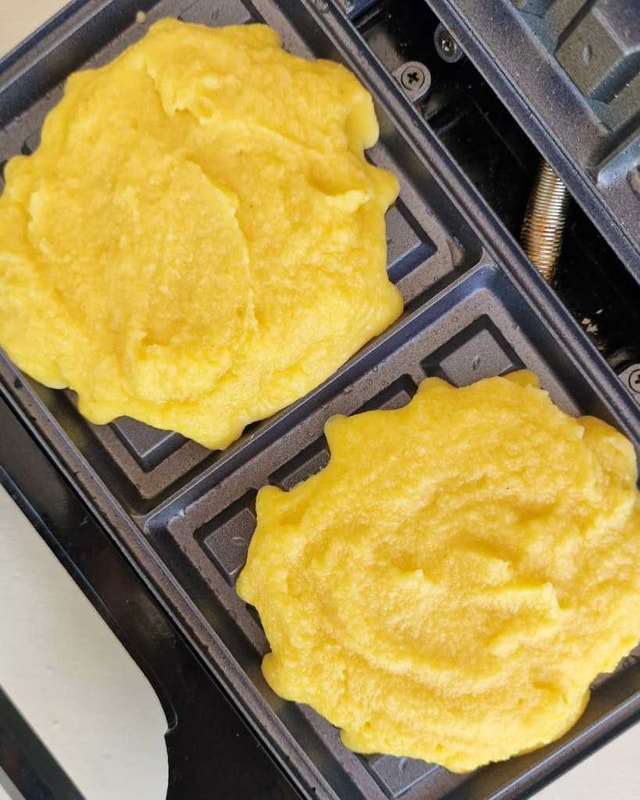 Close the lid and cook according to the waffle iron’s instructions, usually for about 3–5 minutes, or until the waffles are golden brown and cooked through. Carefully remove the waffles from the iron and serve them warm with your favorite toppings!
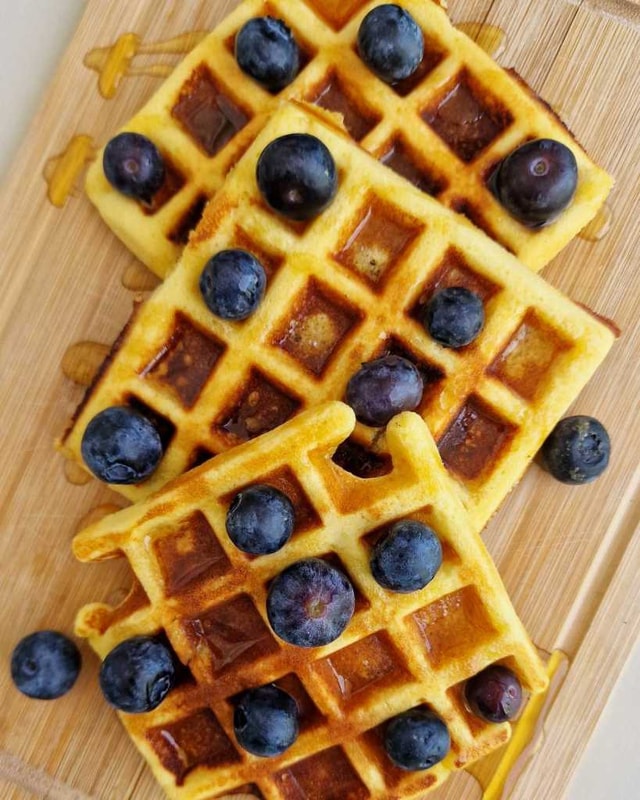 These coconut flour waffles will have a lovely vanilla flavor, and you can enjoy them with your preferred toppings, such as fresh fruits, yogurt, nuts, or a drizzle of honey or maple syrup. These waffles are a nutritious option, rich in fiber and protein from the coconut flour and eggs.
 If you like waffles, check out these waffle recipes:
- Lemon Poppy Seed Waffles
- Healthy Banana Oat Waffles
- Raspberry Waffles (Gluten-Free)
- Chocolate Waffles (Gluten-Free)
A Note from Chef Ana
These Healthy Coconut Flour Waffles are a breakfast favorite among my clients in The Woodlands and throughout the Houston area. I love serving them topped with fresh local blueberries and a drizzle of raw Texas honey — the contrast of crispy, coconut-scented waffles with juicy berries is irresistible. My philosophy has always been about elevating classic American comfort food with proper technique and the freshest local Texas ingredients. I source as much as I can from local farms and markets in the Houston area, because fresh, seasonal produce always makes a noticeable difference.
Whether you are hosting a dinner party, planning a celebration, or simply want a wholesome meal for your family, I would love to bring this recipe — and many more — to your table. Feel free to reach out to learn more about my personal and private chef services in The Woodlands, Spring, Tomball, Conroe, and the greater Houston area.
Substitutions & Variations
As a personal chef who specializes in dietary accommodations, I always encourage my clients to adapt recipes to their individual needs. Here are some practical variations for this recipe:
- Dairy-Free: This recipe is already dairy-free as written — it uses almond milk and coconut oil. Just double-check your milk of choice doesn’t contain dairy.
- Egg-Free: Replace each egg with a flax egg (1 tablespoon ground flaxseed mixed with 3 tablespoons water, rested 5 minutes). Coconut flour relies heavily on eggs, so the waffles will be a bit denser but still delicious.
- Sweeter Version: Add 1 tablespoon of honey or maple syrup to the batter for naturally sweetened waffles. You can also stir in a teaspoon of cinnamon for a warmly spiced variation.
Frequently Asked Questions
Why is the batter so thick?
Coconut flour absorbs liquid much more aggressively than regular flour — that’s completely normal. Let the batter rest for 2–3 minutes after mixing so the coconut flour fully hydrates. If it’s still too thick to spread, add milk one tablespoon at a time until you reach a pourable consistency.
Can I freeze leftover waffles?
Yes! Let the waffles cool completely on a wire rack, then freeze them in a single layer on a baking sheet. Once frozen, transfer to a zip-lock bag for up to 2 months. Reheat directly in a toaster or toaster oven for a quick, crispy breakfast.
Why are my waffles sticking to the iron?
Coconut flour waffles are more delicate than wheat-based ones. Make sure to grease the waffle iron generously before each waffle — coconut oil spray works best. Also, don’t open the iron too early. Let the waffle cook for the full 3–5 minutes until it develops a firm, golden crust that releases cleanly.
You Might Also Like
Love This Recipe?
Discover more delicious recipes and consider our personal chef services for fresh, healthy meals prepared in your home.